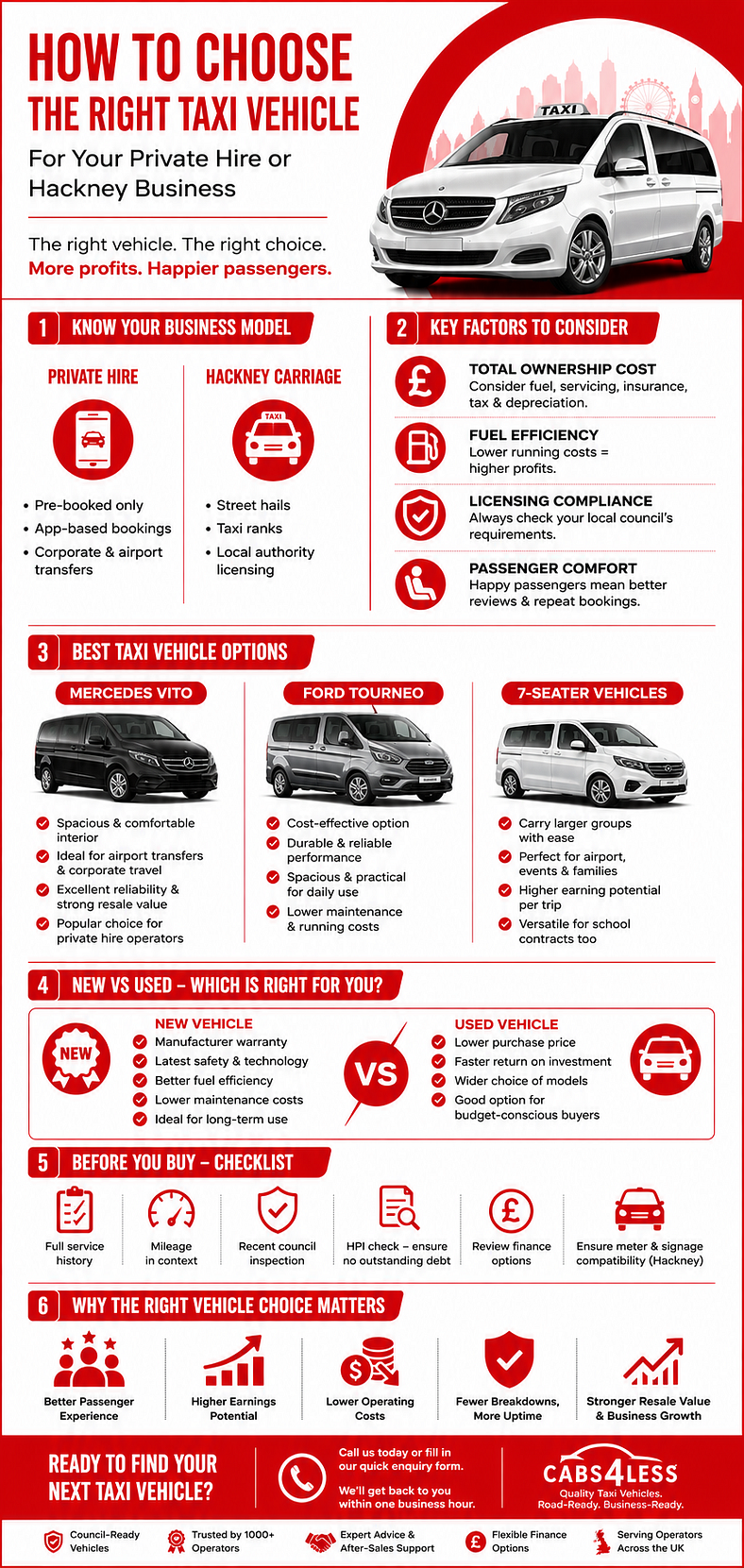
Starting or growing a taxi business is one of those decisions that looks straightforward from the outside but gets complicated fast once you are in the thick of it. Licensing rules, vehicle specifications, passenger requirements, fuel costs, insurance brackets and resale value all come into play before you even turn a wheel. And at the centre of all of it is a single, deceptively simple question: which vehicle should you actually buy?
This guide is written by the team at Cabs4Less for anyone who is actively looking for a taxi for sale and wants practical, honest advice rather than a sales pitch. Whether you are buying your first cab or expanding a fleet that already has several vehicles on the road, the choices you make at this stage have a long-term impact on your profitability, your driver comfort, and your passenger ratings.
We will walk through the most popular vehicle types currently on the market, explain what each one is suited for, and help you match the right vehicle to your specific operation.
Why the Right Vehicle Matters More Than Most Buyers Realise

A lot of first-time operators focus almost entirely on price. That is understandable. Budget is real and it shapes every decision. But in the taxi trade, the cheapest vehicle at the point of purchase is often the most expensive vehicle over time. Repair bills, fuel inefficiency, failed licensing inspections, or simply a car that passengers find uncomfortable can quietly eat into your margins every single week.
The vehicles that consistently hold their value, pass council inspections, and keep passengers happy tend to be the ones that operators come back to buy again. That pattern is not a coincidence. It reflects years of real-world use across thousands of drivers. So when you are evaluating your options, think in terms of total cost of ownership, not just the sticker price.
The Case for Buying New: Peace of Mind That Pays Off
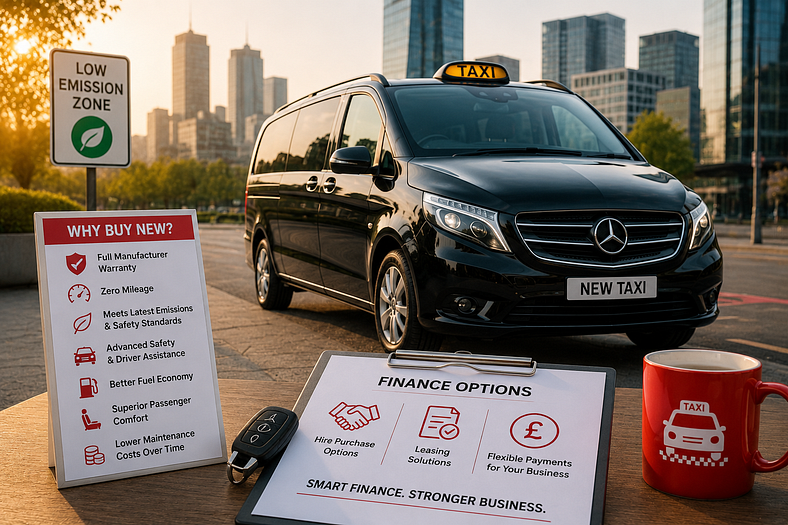
There is a strong argument to be made for buying a new taxi for sale rather than going straight to the used market. Yes, the upfront cost is higher. But what you get in return is a full manufacturer warranty, zero mileage on the clock, and a vehicle that meets current emissions and safety standards from day one.
For operators in cities with strict low emission zone requirements, buying new is not just a preference but often a necessity. Many newer vehicles also come with enhanced driver assistance features, improved fuel economy, and better passenger comfort ratings compared to their older equivalents. If your business plan involves operating for three to five years before your next purchase, the lower maintenance costs of a new vehicle can more than offset the higher initial spend.
Financing options for new vehicles have also improved considerably. Many dealers now offer tailored hire purchase and leasing arrangements specifically designed for the taxi and private hire sector, which makes managing cash flow much more predictable.
Why the Mercedes Vito Dominates the Private Hire Market
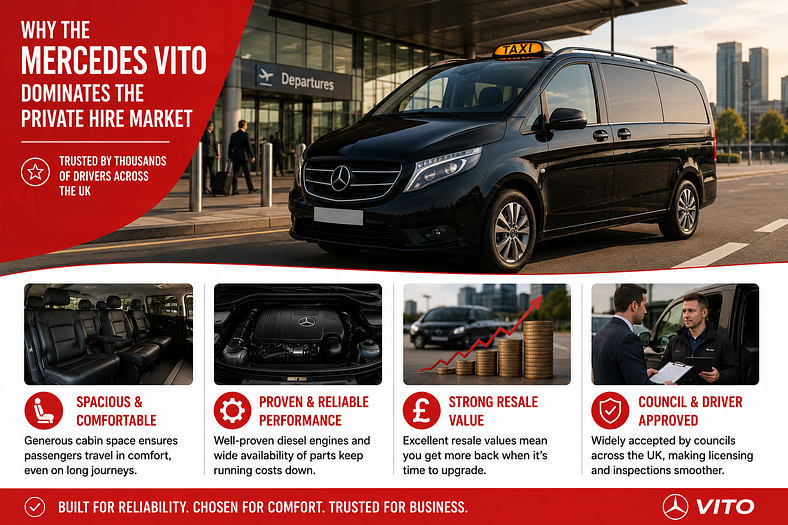
If you speak to experienced operators across the UK, one name comes up again and again. When drivers look for a Vito taxi for sale, they are buying into a vehicle that has earned its reputation through consistent real-world performance rather than marketing.
The broader range of Mercedes taxi for sale options reflects just how much the brand has committed to the professional transport sector. But it is the Mercedes Vito taxi for sale that has become the default choice for a large proportion of private hire operators in the UK, particularly for airport runs, corporate accounts, and school contracts where reliability is non-negotiable.
What makes it so popular? A few things stand out:
-
The cabin space is genuinely impressive. Passengers can sit comfortably without feeling cramped, which is especially valuable for longer journeys.
-
The diesel engines are well proven and parts are widely available, keeping service costs manageable.
-
Resale values hold up well compared to many competitors, meaning your vehicle retains meaningful value when you are ready to upgrade.
-
Council licensing teams across most UK regions are familiar with the vehicle, which can smooth the inspection process.
The Ford Tourneo: A Competitive Alternative Worth Serious Consideration
Not every operator needs or wants a Mercedes. For those who are budget-conscious without wanting to compromise on practicality, the Ford Tourneo taxi for sale market offers some genuinely compelling options.
The Tourneo has grown its presence in the taxi sector noticeably over the last decade. Ford's reputation for durable commercial vehicles transfers well here. The Tourneo offers a spacious interior, solid build quality, and typically comes in at a lower purchase price than its German rivals.
Service network coverage is another advantage. Ford garages are found in virtually every town and city, which matters when a vehicle needs attention quickly and you cannot afford downtime. Parts availability is excellent and labour costs at independent garages tend to be lower than for premium European brands.
For operators running local private hire rather than airport transfers or corporate accounts, the Tourneo delivers strong value for money and a comfortable passenger experience.
Understanding the Hackney Licence: What It Means for Your Vehicle Choice
One of the most important distinctions in the UK taxi industry is the difference between a hackney carriage licence and a private hire licence. They are not interchangeable, and they affect which vehicles you can legally operate.
A private hire taxi for sale refers to a vehicle licensed to carry passengers on a pre-booked basis only. These vehicles cannot be hailed on the street or pick up from a taxi rank. The private hire market is large and growing, driven partly by app-based booking platforms, and the vehicle requirements vary by local authority.
The Ford Hackney taxi for sale sits in a different category. Hackney carriages can be hailed in the street and are permitted to use designated taxi ranks. This is the traditional cab model that remains strong in many UK cities and towns outside London. Vehicle requirements for hackney licensing are typically more prescriptive, which is why certain models have become standard in the sector over many years.
Before you commit to any vehicle purchase, verify with your local licensing authority which vehicles are on their approved list. Some councils maintain strict approved vehicle lists, and buying outside of those lists can create serious problems at the licensing stage.
The 7 Seater Advantage: More Passengers, More Revenue Per Trip
One of the smartest moves an operator can make, particularly in areas with strong demand from families, tourist groups, or sporting events, is investing in a 7 seater taxi for sale. The ability to carry larger groups in a single vehicle significantly increases your earning potential without proportionally increasing your operating costs.
Seven seater vehicles are also well suited to airport runs, where groups of passengers travelling together represent a large share of the market. Rather than splitting a family of five or six across multiple cabs, you become the obvious single-cab solution. Passengers appreciate the convenience, and you benefit from higher fares and better reviews.
School contracts are another strong use case. Many schools and local authorities contract minibus-style transport for students with additional needs. A fully licensed seven-seat taxi can compete directly for these contracts, which tend to offer consistent, predictable income.
The key is to make sure that whichever vehicle you choose is comfortable for seven adults on longer journeys, not just technically capable of fitting seven people. Legroom, headroom, luggage capacity, and air conditioning all matter when passengers are travelling for more than twenty minutes.
Key Things to Check Before You Buy Any Taxi Vehicle
Regardless of which vehicle type you settle on, there are several checks that every buyer should carry out before signing anything.
-
Full service history: A gap in the service record is a red flag, not a minor issue. Taxi vehicles work hard, and regular servicing is non-negotiable.
-
Mileage in context: High mileage is expected on a taxi vehicle. What matters more is how those miles were accumulated and whether the maintenance kept pace.
-
Council inspection readiness: Ask the seller whether the vehicle has recently passed a local authority inspection and whether any advisories were noted.
-
Finance or outstanding debt: Use an HPI check or equivalent to confirm that no outstanding finance is secured against the vehicle.
-
Meter and signage compatibility: If you are buying a hackney vehicle, check that the body is compatible with your preferred meter and roof sign setup.
Buying from a Specialist vs a General Car Dealer
This is a choice that catches a lot of new operators out. General car dealerships can sell you a perfectly roadworthy vehicle, but they rarely understand the licensing requirements, the inspection standards, or the operational demands of the taxi trade. A specialist taxi vehicle supplier, by contrast, will typically have vehicles already prepared to meet council specifications, will understand the paperwork involved, and may be able to assist with the licensing process directly.
The after-sales support from a specialist is also worth factoring in. When something goes wrong at six in the morning before a school run, having a supplier who understands your situation and can prioritise your repair is genuinely valuable. That kind of relationship is hard to build with a general forecourt.
Look for suppliers with a demonstrable track record in the industry, genuine customer reviews from other operators, and a clear process for post-sale support. The slightly higher price you might pay through a specialist is almost always worth it for the reduction in stress and risk.
Making the Final Decision: Match the Vehicle to Your Operation
There is no single best taxi vehicle. There is only the best vehicle for your specific operation, your local licensing requirements, your budget, and your passenger base. A driver doing school runs in a small market town has very different needs from one doing corporate airport transfers in a major city.
Take time to speak to other operators in your area. Find out what vehicles they are running, what problems they have encountered, and what they would do differently if they were starting again. That kind of first-hand knowledge is invaluable and freely available if you ask the right questions.
The taxi trade rewards operators who make thoughtful, well-researched decisions early. Getting the vehicle right from the start means fewer headaches, lower costs, and a better experience for every passenger you carry.
Ready to Find Your Next Taxi Vehicle with Cabs4Less?
Browse the full Cabs4Less range of inspected, council-ready taxi vehicles available now. From single cab purchases to full fleet orders, we are here to help you find the right vehicle at the right price.
The Cabs4Less specialist team has helped hundreds of operators across the UK get road-ready with confidence. We handle the paperwork, understand the licensing requirements, and offer flexible finance options to suit your cash flow.
Call us today or fill in our quick enquiry form and a member of our team will be in touch within one business hour.
Frequently Asked Questions
What types of taxi vehicles does Cabs4Less sell?
Cabs4Less stocks a wide range of new and used taxi vehicles suited to private hire and hackney carriage operators. Our inventory typically includes the Mercedes Vito, Ford Tourneo, and seven-seater options, all inspected and prepared to meet local authority licensing standards.
Do I need a hackney carriage licence or a private hire licence?
It depends on how you plan to operate. A hackney carriage licence allows you to pick up passengers from the street or a taxi rank without a pre-booking. A private hire licence covers pre-booked journeys only, which is the model used by most app-based operators. Your local licensing authority will confirm which applies to your situation, and the Cabs4Less team can advise on which vehicles are approved for each licence type in your area.
Can Cabs4Less help with the licensing and council inspection process?
Yes. Unlike general car dealerships, Cabs4Less specialises exclusively in the taxi trade. Our vehicles are prepared to council specifications and our team understands the paperwork involved. We can guide you through the inspection requirements and help ensure your vehicle is ready to pass from day one.
Does Cabs4Less offer finance options?
Yes. Cabs4Less offers flexible hire purchase and leasing arrangements tailored specifically to the taxi and private hire sector. Whether you are buying a single vehicle or building out a fleet, our finance options are designed to keep your cash flow manageable. Contact our team to discuss what works best for your situation.
Should I buy a new or used taxi vehicle?
Both options have merit and the right choice depends on your budget, intended operating area, and business plan. A new vehicle offers a full manufacturer warranty, zero mileage, and guaranteed compliance with current emission standards –- important if you operate in a low emission zone. A well-maintained used vehicle from Cabs4Less can represent strong value, particularly if you are starting out and want to manage upfront costs. Our advisors can walk you through the pros and cons for your specific circumstances.
Is a seven-seater taxi worth the investment?
For many operators, yes. Seven-seater vehicles open up airport group runs, family bookings, and school contracts that standard four-seaters simply cannot handle. If you regularly work in areas with strong tourist or event demand, the additional earning potential per journey can significantly improve your overall margins. Cabs4Less stocks council-ready seven-seater options –- speak to our team to find out what is currently available.
How do I know if a used taxi has been well maintained?
Always ask for a full service history and check for any gaps. Run an HPI check to confirm there is no outstanding finance on the vehicle. Ask whether it has recently passed a council licensing inspection and whether any advisories were noted. When you buy through Cabs4Less, all vehicles go through our own pre-sale inspection process so you have a clear picture of the vehicle's condition before you commit.
Conclusion
Choosing the right taxi vehicle is one of the most important investments you will make in your transport business. Whether you operate as a private hire driver, run a hackney carriage service, or manage a growing fleet, selecting a reliable, cost-effective, and council-approved vehicle can directly impact your profitability and customer satisfaction. From spacious seven-seater models to trusted options like the Mercedes Vito and Ford Tourneo, there is a solution to suit every business requirement and budget. By focusing on long-term value, licensing compliance, passenger comfort, and running costs, you can make a smarter purchasing decision that supports sustainable growth. At Cabs4Less, we are committed to helping operators find quality taxi vehicles that are ready for the road, giving you the confidence to grow your business with the right vehicle from day one.