

-
What Should Buyers Look for When Purchasing a Newly Built Home in Manhattan Beach?
Buying a newly built luxury home is exciting, but a brand-new property should not be evaluated only by its finishes, appliances, or beautiful architecture. Buyers should look at the location, construction quality, lot, design, systems, functionality, permits, and long-term value before making a major investment.
This is especially important for buyers searching for a new construction house for sale in Manhattan Beach. Manhattan Beach is a highly competitive coastal luxury market where limited land, location, architecture, views, and quality can significantly influence a property's appeal. Current 2026 listing data shows new-construction properties spanning a wide range of prices, reinforcing that buyers need to evaluate each property individually rather than relying only on square footage or asking price.
For Reeland Investments, the focus is on creating and evaluating luxury residential opportunities with purposeful design, quality craftsmanship, and long-term value.
Why Buy a Newly Built Home in Manhattan Beach?
A newly constructed home can offer several advantages over an older property.
Buyers may benefit from:
- Modern floor plans
- Contemporary architecture
- New electrical and plumbing systems
- Modern HVAC systems
- Energy-efficient features
- Premium finishes
- Smart-home technology
- Indoor-outdoor living
- Move-in-ready condition
- Reduced immediate renovation requirements
Current buyer preferences also increasingly emphasize functional layouts, indoor-outdoor connections, natural materials, wellness-oriented bathrooms, and comfortable spaces rather than appearance alone.
For someone searching for a new construction house for sale in Manhattan Beach, the key is determining whether the property delivers these benefits through genuine quality rather than simply marketing language.
1. Start With the Location
Even the most impressive new home cannot change its location.
When evaluating a new construction house for sale in Manhattan Beach, consider:
- Distance to the beach
- Walkability
- Neighborhood character
- Street location
- Privacy
- Views
- Lot orientation
- Access to local amenities
- Surrounding properties
Manhattan Beach has distinct residential areas, and each can provide a different lifestyle and property profile.
A buyer should determine whether the location matches their priorities before becoming focused on the home's interior.
2. Evaluate the Lot Carefully
In a land-constrained coastal market, the lot can be extremely important.
Don't evaluate only the finished house. Look at the property underneath it.
Consider:
- Lot size
- Lot shape
- Outdoor space
- Privacy
- Orientation
- View corridors
- Setbacks
- Development limitations
- Potential for future improvements
A smaller but exceptionally positioned lot may have a very different value proposition from a larger lot in another part of the city.
Reeland Investments evaluates properties from both a residential and development perspective, which makes understanding the land an important part of evaluating a new home.
3. Determine Whether It Is Truly New Construction
This is an important question many buyers overlook.
Ask whether the property is:
- Ground-up construction
- A complete rebuild
- A major renovation
- A partially retained structure
- A remodeled existing home
The difference can matter.
When considering a new construction house for sale in Manhattan Beach, buyers should understand exactly what was built new and what, if anything, was retained from the original property.
Ask for documentation explaining the scope of construction and applicable approvals.
4. Examine Construction Quality
A new home should not be judged solely by its countertops and lighting fixtures.
Look at the underlying construction.
Important areas include:
- Foundation
- Framing
- Roofing
- Waterproofing
- Windows
- Exterior materials
- Plumbing
- Electrical
- HVAC
- Insulation
- Drainage
Premium finishes can create an impressive first impression, but the systems behind the walls play a major role in a home's long-term performance.
Reeland Investments' development approach emphasizes precision, craftsmanship, materials, and quality execution. The company says it remains involved throughout construction to protect the integrity of the design and final result.
5. Inspect the Home Even if It Is Brand New
New does not automatically mean perfect.
A professional inspection can identify issues that are difficult to see during a normal walkthrough.
Buyers should consider inspecting:
- Structural elements
- Roofing
- Plumbing
- Electrical systems
- HVAC
- Windows and doors
- Drainage
- Waterproofing
- Appliances
- Exterior areas
- Pool and landscaping systems
An inspection can give buyers greater confidence and help identify issues that may need attention before or after closing.
6. Look Closely at the Floor Plan
A luxury home should be beautiful and functional.
Ask yourself:
Does the layout work for everyday life?
Look for:
- Comfortable bedroom placement
- Functional kitchen design
- Good circulation
- Storage
- Flexible rooms
- Private spaces
- Entertaining areas
- Convenient laundry
- Indoor-outdoor flow
A home can have an impressive square-footage number while still having an inefficient layout.
For today's luxury buyers, functionality is increasingly important alongside visual design.
7. Examine Materials and Finishes
When touring a new construction house for sale in Manhattan Beach, don't simply ask whether the materials are expensive.
Ask whether they are:
- Durable
- Appropriate for the environment
- Timeless
- Well installed
- Consistent with the home's architecture
- Easy to maintain
Look closely at:
- Flooring
- Cabinetry
- Countertops
- Doors
- Hardware
- Fixtures
- Windows
- Bathroom finishes
- Exterior materials
Natural and durable materials can provide a timeless quality that remains attractive beyond current design trends.
8. Consider Indoor-Outdoor Living
Coastal Southern California homes are often designed around outdoor living.
A well-designed residence may incorporate:
- Large sliding doors
- Covered patios
- Outdoor kitchens
- Dining areas
- Fire features
- Pools
- Rooftop decks
- Landscaped spaces
The connection between interior and exterior spaces is also a current buyer preference, particularly for luxury homes.
When evaluating a new construction house for sale in Manhattan Beach, consider whether the outdoor environment feels like a genuine extension of the home.
9. Evaluate Views and Natural Light
Views can make a major difference in coastal luxury real estate.
Depending on the location, buyers may value:
- Ocean views
- Sunset exposure
- Rooftop views
- Open sightlines
- Natural light
- Privacy
However, don't pay a premium simply because a listing describes a property as having a “view.”
Determine:
- What you can actually see
- From which rooms
- Whether the view is protected
- Whether surrounding development could affect it
- Whether the view is seasonal or permanent
10. Review Smart-Home and Energy-Efficient Features
Today's newly built luxury homes often incorporate technology into everyday living.
Depending on the property, features can include:
- Smart lighting
- Security systems
- Automated shades
- Climate controls
- Audio systems
- Energy-efficient appliances
- EV charging
- Efficient windows
- Modern HVAC
Technology should improve the living experience rather than simply increase the feature list.
Buyers should also consider whether systems are easy to operate, maintain, and upgrade.
11. Understand the Home's Long-Term Value
The best new construction house for sale in Manhattan Beach isn't necessarily the biggest or most expensive.
Long-term value can be influenced by:
- Location
- Lot quality
- Architectural design
- Construction quality
- Functional layout
- Privacy
- Views
- Outdoor living
- Materials
- Maintenance
- Future buyer demand
Reeland Investments describes its philosophy as “Value That Lasts,” emphasizing planning, material choices, timeless design, and long-term confidence rather than focusing only on the handover date.
12. Understand the Neighborhood
A luxury home should fit the neighborhood.
Before buying, research the surrounding environment and consider how it aligns with your lifestyle.
For example, Reeland Investments currently develops across Manhattan Beach areas including the Sand Section, Hill Section, Tree Section, and El Porto, each offering different characteristics for luxury residential living.
The right choice depends on whether you prioritize beach proximity, views, outdoor space, privacy, neighborhood atmosphere, or other lifestyle factors.
13. Ask About Construction and Warranty Information
Before purchasing a new construction house for sale in Manhattan Beach, ask for relevant documentation concerning:
- Construction scope
- Permits
- Final approvals
- Appliances
- Systems
- Manufacturer warranties
- Builder warranties
- Maintenance requirements
- Manuals for installed systems
Keep these documents organized after closing.
They can be useful for future maintenance and may become important if you eventually sell the property.
14. Compare the Home With Other New Construction
Don't fall in love with the first property you see.
Compare several homes based on:
Factor What to Evaluate Location Beach access, neighborhood, street Lot Size, shape, privacy, views Construction Quality and workmanship Design Architecture and functionality Materials Durability and quality Outdoor Space Pool, patio, landscaping Technology Smart-home and efficiency Price Overall value Long-Term Potential Future buyer appeal This approach helps buyers make a decision based on the complete property rather than one attractive feature.
Why Reeland Investments Stands Out
Reeland Investments brings together luxury residential development, construction, renovation, and investment expertise.
The company reports more than 400 completed projects and more than $1 billion in combined project value across Southern California.
Its Manhattan Beach work includes ground-up custom homes, luxury spec homes, and full-scale renovations. Reeland also states that it currently has multiple new construction projects in active development in Manhattan Beach.
This development-focused experience provides buyers with a useful perspective when evaluating architecture, construction quality, land, functionality, and long-term residential value.
Common Mistakes Buyers Should Avoid
Focusing Only on the Interior
A beautiful interior does not tell you everything about the property.
Ignoring the Lot
The land can be one of the most important components of a coastal property.
Assuming New Means Maintenance-Free
Every home requires maintenance, including newly constructed properties.
Skipping an Inspection
Even a brand-new home should be carefully evaluated.
Paying Only for Square Footage
Design, location, lot quality, views, and construction can matter just as much.
Ignoring Future Resale Appeal
Think about whether the property will remain attractive to future luxury buyers.
Frequently Asked Questions
What should I look for when buying a new construction home?
Focus on location, lot quality, construction, architecture, floor plan, materials, systems, outdoor living, documentation, and long-term value.
Are new construction homes in Manhattan Beach worth the premium?
They can be, particularly for buyers who value modern design, updated systems, luxury finishes, and move-in-ready living. However, every property should be evaluated individually.
What should I inspect in a newly built home?
Consider a professional inspection covering structural elements, roofing, plumbing, electrical, HVAC, windows, drainage, waterproofing, appliances, and exterior features.
Is a ground-up home better than a remodeled home?
Not automatically. Ground-up construction can provide a completely new structure and modern design, while a well-executed renovation can also create an exceptional residence.
Why is the lot important in Manhattan Beach?
Limited coastal land makes location, lot characteristics, privacy, views, and development considerations important parts of the property's overall appeal.
What features do luxury buyers want today?
Current buyer preferences increasingly emphasize functional layouts, indoor-outdoor living, natural materials, comfortable spaces, and high-quality bathrooms alongside luxury finishes.
How can I evaluate the long-term value of a new home?
Consider the location, land, construction quality, design, functionality, materials, maintenance requirements, and potential future buyer demand.
Can I buy a Reeland Investments home before it is completed?
Reeland Investments states that select projects may be available for pre-sale, depending on current availability.
Why choose Reeland Investments?
Reeland Investments combines luxury residential development, construction, renovation, and investment experience, with a focus on purposeful design, quality execution, and lasting value.
Final Thoughts
Buying a new construction house for sale in Manhattan Beach is about much more than finding a beautiful new property.
The smartest buyers look underneath the surface.
Evaluate the location, lot, construction quality, architecture, floor plan, materials, systems, outdoor living, views, documentation, and long-term value before making your decision.
Manhattan Beach is a highly competitive coastal luxury market, and current new-construction listings demonstrate significant variation in size, location, design, and pricing.
Reeland Investments approaches luxury residential development with a focus on purposeful design, quality craftsmanship, and value that lasts.
If you're searching for a new construction house for sale in Manhattan Beach, Reeland Investments can help you explore luxury residential opportunities and understand what to look for in a newly built home.
-
How to Choose the Right Network Patch Panel for Your Business in Ireland
A well-organised network infrastructure is essential for businesses, schools, offices, data centres, and other environments that rely on dependable wired connectivity. While switches, routers, cables, and network equipment often receive most of the attention, patch panels play an equally important role in creating a structured and manageable network.
A patch panel provides a central point for terminating and organising network cables. Instead of connecting numerous permanent cables directly to networking equipment, installers can terminate the cables at a patch panel and use shorter patch cables to connect the panel to switches and other devices.
For businesses researching Patch Panels ireland, understanding the different types, specifications, and installation considerations can help ensure the chosen solution is suitable for the network.
What Is a Network Patch Panel?
A network patch panel is a hardware component used to organise and terminate network cables in a structured cabling system.
Typically installed inside a server rack, cabinet, or communications enclosure, a patch panel contains multiple ports. Permanent Ethernet cables from different rooms, workstations, access points, or other network locations are connected to the rear of the panel.
Short patch cables can then connect the front ports to network switches.
This arrangement makes network infrastructure easier to manage, troubleshoot, label, and expand.
Why Are Patch Panels Important?
A properly installed patch panel can improve the organisation and maintainability of a network.
Instead of having dozens of cables running directly into a network switch, the patch panel provides a clear termination point. This can make it easier for IT staff or technicians to identify connections and perform maintenance.
Key benefits include:
-
Better cable organisation
-
Easier troubleshooting
-
Cleaner server racks
-
Simplified network maintenance
-
Improved cable management
-
Easier future expansion
-
Reduced strain on network switch ports
-
Clearer identification of network connections
For larger installations, structured cabling and proper labelling can save considerable time when diagnosing connectivity problems.
Choosing an IT Patch Panel in Cork
When looking for an IT patch panel cork, consider the type of network being installed and the cabling category being used.
Common Ethernet cabling categories include Cat5e, Cat6, and Cat6A. The patch panel should be compatible with the cable category and network requirements.
For example, installing higher-category cabling but connecting it to unsuitable components can prevent the network from achieving its intended performance.
Before purchasing, check:
-
Cable category
-
Number of ports
-
Rack size
-
Port configuration
-
Shielded or unshielded design
-
Connector type
-
Cable management requirements
-
Installation environment
-
Future expansion requirements
Cat5e, Cat6 and Cat6A Patch Panels
The network cable category is an important consideration when selecting a patch panel.
Cat5e
Cat5e is commonly used for standard Ethernet installations and can support Gigabit Ethernet under appropriate conditions.
It can be suitable for many offices and general-purpose network installations.
Cat6
Cat6 provides improved specifications compared with Cat5e and is widely used in modern structured cabling systems.
It can be a suitable option for offices, commercial buildings, and installations where higher-performance network infrastructure is required.
Cat6A
Cat6A is designed for higher-performance applications and can support 10 Gigabit Ethernet over appropriate distances and installation conditions.
It may be particularly useful for businesses planning high-speed networks or infrastructure intended to remain in service for many years.
The cable, patch panel, connectors, installation practices, and other network components should be appropriately matched to achieve the desired performance.
How Many Ports Do You Need?
Patch panels are available with different numbers of ports.
Smaller networks may only require a relatively compact panel, while larger businesses may need multiple panels or higher-density configurations.
When choosing the number of ports, consider both current requirements and potential future expansion.
For example, if a business currently needs 18 network connections but expects to add additional workstations, wireless access points, IP cameras, or other devices, choosing a panel with additional available ports can make future expansion easier.
Planning ahead can also reduce the need to replace network infrastructure later.
Patch Panels and Cable Management
Cable management is one of the main reasons businesses use patch panels.
A poorly organised network cabinet can make troubleshooting difficult and increase the risk of accidental disconnections.
A well-designed installation should include:
-
Clearly labelled ports
-
Appropriate patch cable lengths
-
Cable management accessories
-
Proper rack positioning
-
Adequate ventilation
-
Logical port numbering
-
Sufficient space for future additions
Keeping cables organised can make routine maintenance significantly easier for IT teams and technicians.
Finding Patch Panels in Cork
Businesses searching for Patch Panels cork should consider both the product specification and how the panel will fit into the overall network design.
The correct patch panel depends on the type of Ethernet cabling, number of connections, rack configuration, and network performance requirements.
PC Systems can help customers identify appropriate networking hardware based on the requirements of their particular installation.
Whether you are upgrading an existing office network or setting up a new infrastructure, selecting compatible components from the beginning can help create a more reliable and manageable system.
Shielded vs Unshielded Patch Panels
Another consideration is whether the installation requires shielded or unshielded components.
Unshielded twisted-pair systems are common in many office environments and can be suitable where electromagnetic interference is not a significant concern.
Shielded systems provide additional protection against certain types of electromagnetic interference when correctly installed with compatible shielded cables and components.
The decision should be based on the environment and network design rather than choosing one type simply because it appears more advanced.
Network Patch Panels for Business Infrastructure
A Network patch panel Ireland businesses choose should fit into the broader structured cabling system.
For example, a business network may include:
-
Ethernet cabling
-
Patch panels
-
Network switches
-
Routers
-
Wireless access points
-
Servers
-
Firewalls
-
IP cameras
-
VoIP systems
-
Rack cabinets
All of these components need to work together correctly.
A patch panel does not increase internet speed by itself. Its primary purpose is to provide an organised and structured method of terminating and managing network cabling.
Rack-Mount and Wall-Mount Options
Patch panels are available in different installation formats.
Rack-mounted panels are commonly used in server rooms and communications cabinets. They can be installed alongside switches, cable management panels, power distribution equipment, and other rack-mounted hardware.
Wall-mounted solutions can be useful for smaller network installations where a full-size server rack is unnecessary.
The choice depends on available space, the number of connections, and the overall network infrastructure.
What to Check Before You Buy
If you are planning to Buy patch panel Cork Ireland, review the following specifications before purchasing:
Port Count
Choose enough ports for your current network while allowing room for reasonable expansion.
Cable Compatibility
Make sure the panel is compatible with your Ethernet cable category.
Rack Compatibility
For rack-mounted installations, confirm the panel’s dimensions and mounting requirements.
Shielding
Determine whether shielded or unshielded infrastructure is appropriate for your environment.
Labelling
A panel that supports clear identification can make future maintenance easier.
Build Quality
A durable patch panel can be valuable in commercial installations where cables are frequently connected, disconnected, or rearranged.
Common Patch Panel Installation Mistakes
Even a high-quality patch panel may not perform as expected if it is installed incorrectly.
Common mistakes include:
-
Mixing incompatible cable categories
-
Poor cable termination
-
Incorrect labelling
-
Excessive cable tension
-
Poor cable management
-
Overcrowding the network cabinet
-
Failing to leave room for expansion
-
Using inappropriate patch cables
Professional installation and proper testing can help identify wiring and connectivity problems before a network becomes operational.
Frequently Asked Questions
What does a patch panel do?
A patch panel provides a central location for terminating and organising network cables. It allows permanent cabling to connect neatly to switches and other networking equipment through patch cables.
Do patch panels improve internet speed?
A patch panel does not directly increase internet speed. Its primary purpose is to organise and manage structured network cabling.
Which patch panel should I use for Cat6 cable?
Choose a patch panel specifically designed to support the relevant cable category and network requirements. The entire cabling system should be compatible with the desired performance level.
How many ports should a patch panel have?
The required port count depends on the number of network connections. It is often useful to allow additional capacity for future expansion.
Are patch panels necessary for every network?
Not necessarily. Small networks may not require a dedicated patch panel, but structured installations with many permanent Ethernet connections can benefit significantly from one.
Can PC Systems help with network hardware?
Yes. PC Systems can help customers identify suitable networking hardware based on their cabling requirements, number of connections, and network infrastructure.
Get the Right Patch Panel for Your Network
Choosing the right patch panel starts with understanding the requirements of your network. Consider the Ethernet cable category, number of ports, installation type, shielding, rack configuration, and future expansion needs before making a purchase.
PC Systems can help customers evaluate their networking requirements and choose suitable hardware for office, commercial, and other structured network installations.
If you are upgrading an existing network or planning a new installation, selecting compatible and properly specified components can make the system easier to manage and maintain.
Conclusion
Patch panels are an important part of structured network infrastructure. They provide an organised termination point for Ethernet cables and make network connections easier to identify, maintain, troubleshoot, and expand.
Whether you are setting up a small office or managing a larger commercial network, the right patch panel should be compatible with your cabling category, installation environment, port requirements, and future plans.
For customers researching Ethernet patch panel Cork solutions, PC Systems can provide practical guidance on networking hardware and connectivity requirements. By selecting the appropriate patch panel and installing it correctly, businesses can create a cleaner, more manageable, and scalable network infrastructure.
-
-
7 Important Things to Consider Before Buying a New Taxi
Buying a new taxi is a major investment, whether you’re an independent driver, a private hire operator, or managing a growing fleet. The vehicle you choose will directly affect your daily operating costs, passenger satisfaction, and long-term profitability. That’s why it’s important to look beyond the purchase price and evaluate factors such as fuel efficiency, comfort, reliability, and licensing requirements.
The UK taxi industry is evolving rapidly, with stricter emissions standards and an increasing demand for hybrid and electric vehicles. Choosing a taxi that meets today’s requirements while remaining practical for the future can help you stay competitive and maximise your return on investment.
In this guide, we’ll explore seven key factors every buyer should consider before purchasing a new taxi, helping you make an informed decision that supports your business for years to come.1. Understand Your Business Requirements
Before comparing different taxi models, take a step back and think about how you plan to use your vehicle. Every taxi business has different requirements, and choosing a vehicle that aligns with your day-to-day operations will help you work more efficiently and serve your customers better.
A taxi that’s ideal for city-based private hire may not be the best choice for long-distance airport transfers or larger group bookings. Understanding your business needs is the first step towards making a smart investment.Identify Your Main Services
Ask yourself what type of work you’ll be doing most often.
Common taxi services include:- Private hire bookings
- Airport transfers
- Executive travel
- Hotel transportation
- School contracts
- Corporate travel
- Local city journeys
Consider Your Daily Mileage
Your average daily mileage has a significant impact on running costs.
For example:
- Low mileage: Petrol or hybrid vehicles may be suitable.
- Medium mileage: Hybrid and PHEV models often offer an excellent balance of efficiency and flexibility.
- High mileage: Electric vehicles or highly fuel-efficient hybrids can significantly reduce operating costs over time.
Think About Future Growth
Don’t just buy for today’s needs — consider where your business could be in the next few years.
Questions to ask yourself:
- Will I remain an owner-driver?
- Am I planning to expand my fleet?
- Will I need larger vehicles in the future?
- Could customer demand change?
Expert Tip: Choose a taxi that not only meets your current workload but also supports your long-term business goals.2. Choose the Right Type of Taxi Vehicle
The type of vehicle you select plays a major role in passenger comfort, earning potential, and operational efficiency. A practical vehicle should match your target customers while providing enough space, reliability, and comfort for everyday use.
Instead of focusing solely on appearance, evaluate each vehicle based on how well it fits your business model.Saloon Cars
Saloon taxis remain a popular choice for many drivers because they are economical and easy to drive.
Best suited for:
- Local taxi services
- Business travellers
- Individual passengers
- Everyday private hire work
- Lower purchase cost
- Better fuel economy
- Easy to park
- Comfortable ride
MPVs and 7-Seater Vehicles
Larger vehicles provide greater flexibility and allow drivers to accept a wider variety of bookings.
Ideal for:- Airport transfers
- Family travel
- Group bookings
- Hotel guests
- Corporate transport
- Additional seating capacity
- More luggage space
- Higher earning potential
- Increased booking opportunities
Executive Vehicles
If your business focuses on premium customers, investing in an executive vehicle can help you attract higher-paying clients.
Executive taxis typically offer:- Premium interiors
- Advanced technology
- Luxury seating
- Enhanced passenger comfort
- Professional appearance
Quick Checklist
Before choosing a vehicle, consider:
✔ Passenger capacity
✔ Luggage space
✔ Driver comfort
✔ Fuel efficiency
✔ Reliability
✔ Licensing compliance3. Compare Fuel Options and Running Costs
Fuel is one of the largest ongoing expenses for any taxi business. Choosing the right fuel type can make a significant difference to your annual operating costs and environmental impact.
Instead of looking only at the purchase price, calculate the total cost of ownership over several years.Petrol
Petrol vehicles remain a practical choice for drivers covering relatively low annual mileage.
Pros- Lower purchase price
- Widely available fuel
- Smooth driving experience
- Higher fuel costs than hybrids
- Less economical for heavy daily use
Hybrid
Hybrid taxis combine a petrol engine with an electric motor to improve fuel economy.
Advantages- Excellent for stop-start city driving
- Lower fuel consumption
- Reduced emissions
- No charging required
Plug-in Hybrid (PHEV)
PHEVs provide additional flexibility by allowing drivers to travel short distances using electric power before switching to petrol.
Ideal for drivers who:- Operate in cities
- Occasionally travel longer distances
- Want lower fuel costs
- Have access to charging facilities
Electric Vehicles
Electric taxis are becoming increasingly attractive as charging infrastructure expands across the UK.
Benefits include:- Zero tailpipe emissions
- Lower servicing costs
- Quiet driving
- Reduced running expenses
- Environmentally friendly operation
Don’t Forget Other Running Costs
Fuel isn’t your only expense.
Make sure you budget for:- Insurance
- Vehicle servicing
- MOT tests
- Replacement tyres
- Licensing fees
- Routine maintenance
- Unexpected repairs
4. Prioritise Passenger Comfort and Safety
A successful taxi business depends on more than simply getting passengers from one destination to another. Comfort and safety influence customer satisfaction, online reviews, and repeat bookings.
Choosing a taxi with modern features benefits both your passengers and your daily driving experience.Passenger Comfort Features
Look for vehicles that offer:- Comfortable seating
- Spacious rear legroom
- Large luggage compartment
- Automatic climate control
- Rear air vents
- USB charging ports
- Smooth suspension
- Low cabin noise
Essential Safety Features
Modern taxis should include the latest safety technologies.
Important features include:
- Multiple airbags
- Anti-lock Braking System (ABS)
- Electronic Stability Control (ESC)
- Emergency Braking Assist
- Lane Departure Warning
- Blind Spot Monitoring
- Parking sensors
- Rear-view camera
- Tyre Pressure Monitoring System
Why Comfort and Safety Matter
Passengers are more likely to recommend a taxi service when they enjoy a clean, comfortable, and secure journey.
Investing in a vehicle with modern safety technology and passenger-focused features can lead to:- Better customer reviews
- More repeat bookings
- Greater passenger confidence
- Improved professional reputation
- Higher long-term earnings
5. Check UK Taxi Licensing Requirements
Before purchasing a new taxi, it’s essential to ensure the vehicle complies with the licensing requirements set by your local authority.
Regulations can vary between councils across the UK, so a vehicle approved in one area may not automatically qualify in another.
Taking the time to confirm these requirements before buying can help you avoid unnecessary expenses, delays, or the need to replace a vehicle that doesn’t meet local standards.What Should You Check?
Different licensing authorities may have specific rules regarding:- Vehicle age limits
- Emission standards
- Accessibility requirements
- Approved vehicle types
- MOT and vehicle inspections
- Taxi insurance requirements
Questions to Ask Before Buying
Before placing an order, ask your local licensing authority:
- Is this vehicle approved for taxi or private hire use?
- Does it meet current emissions standards?
- Are there any accessibility requirements?
- Will future regulations affect this vehicle?
6. Consider Reliability, Warranty and Resale Value
A taxi is a long-term business asset, so reliability should be one of your top priorities. A dependable vehicle spends more time on the road generating income and less time in the workshop.
While every vehicle requires regular maintenance, choosing a model with a strong reputation for reliability can help reduce unexpected repair costs and minimise downtime.Why Reliability Matters
Reliable taxis offer several advantages:
- Fewer mechanical issues
- Lower maintenance costs
- Reduced downtime
- Greater driver confidence
- Consistent business operations
Check the Manufacturer Warranty
A comprehensive warranty provides additional peace of mind during the early years of ownership.
Look for:- Manufacturer warranty coverage
- Roadside assistance
- Service intervals
- Genuine replacement parts
- Approved servicing network
Think About Resale Value
Eventually, you may decide to upgrade your vehicle. Choosing a taxi with strong resale value can reduce the overall cost of ownership.
Vehicles with a good maintenance history, strong reliability record, and high market demand often retain their value better than less popular models.Expert Buying Advice
Before making your final decision, compare:
- Service costs
- Availability of spare parts
- Reliability ratings
- Expected resale value
7. Buy from a Trusted Taxi Supplier
Choosing the right supplier is just as important as choosing the right vehicle. A specialist taxi supplier understands the needs of professional drivers and can provide expert guidance throughout the buying process.
Working with an experienced supplier can make purchasing a new taxi simpler, ensuring you select a vehicle that meets both your business requirements and local licensing standards.Benefits of Buying from a Specialist Supplier
A reputable supplier can offer:- Expert product knowledge
- A wide choice of taxi-ready vehicles
- Guidance on selecting the right model
- Manufacturer warranty support
- Competitive pricing
- Professional customer service
- After-sales assistance
Questions to Ask Your Supplier
Before completing your purchase, ask:- Is the vehicle suitable for my intended taxi service?
- What warranty is included?
- What servicing support is available?
- Are replacement parts easily available?
- Does the vehicle meet current UK taxi standards?
Find Your Ideal Taxi with Cabs4Less
Choosing the right taxi is one of the most important decisions for any professional driver or fleet operator. From understanding your business needs and running costs to selecting the right fuel type and ensuring compliance with UK licensing requirements, every factor plays a role in your long-term success. At Cabs4Less, we’re committed to helping taxi professionals make informed decisions by providing reliable vehicles and expert guidance tailored to the UK taxi industry.
In case you are looking for new electric taxis for sale, Cabs4Less offers modern electric taxi vehicles designed for comfort, reliability, and efficient everyday performance. With spacious interiors, advanced features, and zero-emission electric technology, our new electric taxis are an excellent choice for professional taxi drivers and fleet operators across the UK.Frequently Asked Questions
1. What is the most important factor when buying a new taxi?
The best taxi depends on your business needs. Consider passenger capacity, fuel efficiency, running costs, licensing requirements, and long-term reliability before making a purchase.2. Is it better to buy a hybrid or an electric taxi?
Hybrid taxis are ideal for drivers who want improved fuel efficiency without relying on charging infrastructure. Electric taxis are better suited for operators with convenient access to charging facilities and who mainly work in urban areas.3. How can I reduce my taxi running costs?
Choosing a fuel-efficient vehicle, following regular maintenance schedules, driving efficiently, and selecting a reliable model can help reduce overall operating expenses.4. Should I check licensing requirements before buying a taxi?
Yes. Licensing regulations vary between local authorities, so always confirm that your chosen vehicle meets the requirements of the council where you intend to operate.5. Are larger taxis a good investment?
If you regularly transport families, airport passengers, or group bookings, a larger taxi can increase your earning opportunities by allowing you to accept a wider range of jobs.Conclusion
Buying a new taxi is more than simply selecting a vehicle that fits your budget. It’s an investment that will influence your operating costs, customer satisfaction, and business success for years to come.
Before making your decision, take the time to assess your business needs, compare different vehicle types, evaluate running costs, understand local licensing requirements, and prioritise safety, comfort, and long-term reliability.
By considering these seven important factors, you’ll be better equipped to choose a taxi that supports your business goals while delivering a comfortable and dependable experience for your passeng -
The Complete Guide to Fit-Out & Renovation Approvals in Dubai
Dubai is known for its dynamic real estate market, modern commercial spaces, luxury residences, and ambitious development projects. Whether you are renovating an apartment, fitting out an office, upgrading a retail store, or transforming a hospitality space, obtaining the right approvals is one of the most important steps in the process.
A well-planned approval process helps prevent costly delays, rejected applications, compliance issues, and unexpected modifications during construction. For businesses and property owners considering Fit out and Renovations in Dubai, understanding the regulatory requirements from the beginning can make the entire project significantly smoother.
This complete guide explains the key approvals, authorities, documents, processes, and practical considerations involved in fit-out and renovation projects in Dubai.
What Is a Fit-Out or Renovation Project?
A fit-out project generally involves preparing an interior space for occupation or business operations. It can include partitioning, flooring, ceilings, electrical systems, lighting, plumbing, air-conditioning, joinery, signage, and interior finishes.
Renovation projects may go further by modifying an existing property. Depending on the scope, renovations can involve changes to layouts, walls, MEP systems, façades, kitchens, bathrooms, structural elements, or other building components.
The approval requirements depend largely on the type of property, location, project scope, building regulations, and proposed modifications.
Why Are Fit-Out Approvals Important in Dubai?
Dubai has strict building, safety, and development regulations designed to protect occupants, property owners, businesses, and surrounding developments.
Obtaining the required approvals ensures that:
-
The proposed work complies with applicable building regulations.
-
Fire and life-safety requirements are addressed.
-
Electrical and mechanical systems meet relevant standards.
-
Building management requirements are satisfied.
-
Construction activities are properly authorized.
-
Structural and architectural changes are reviewed where necessary.
-
The completed premises can legally be occupied and operated.
Starting construction without obtaining the necessary approvals can lead to work stoppages, penalties, additional costs, and delays in opening the property.
Which Authorities May Be Involved?
The exact authorities involved depend on the location and nature of the project. Dubai Municipality is an important authority for many construction and building-related matters, while other projects may require approvals from additional government entities, free-zone authorities, developers, or building management teams.
Depending on the project, approvals may involve:
Dubai Municipality
Dubai Municipality oversees various building, construction, health, safety, and development requirements within Dubai. Projects that involve architectural or technical modifications may require submissions and approvals through the applicable municipal processes.
Dubai Civil Defence
Fire and life-safety requirements are particularly important for commercial and public-facing properties. Depending on the project, fire alarm systems, firefighting equipment, emergency exits, fire-rated materials, and other safety provisions may need review and approval.
Master Developer or Building Management
Many developments in Dubai have their own approval procedures. Before starting work, property owners and tenants may need approval from the master developer, landlord, property management company, or community management team.
These requirements can apply to items such as:
-
Interior layouts
-
Contractor access
-
Working hours
-
Construction permits
-
Material deliveries
-
Signage
-
Façade modifications
-
MEP changes
-
Noise and waste management
Free-Zone Authorities
If the property is located within a Dubai free zone, the relevant free-zone authority may have its own requirements and approval procedures. The process can therefore differ from projects located under standard mainland jurisdiction.
Common Types of Fit-Out and Renovation Approvals
Not every project requires the same approvals. The scope should be assessed before design and construction begin.
1. Architectural Approval
Architectural approval generally covers the proposed internal layout and design. It may include:
-
Floor plans
-
Partition layouts
-
Reflected ceiling plans
-
Door schedules
-
Flooring layouts
-
Interior elevations
-
Finishing details
-
Space planning
If the project changes the existing configuration of the premises, architectural approval may be required.
2. MEP Approvals
Mechanical, electrical, and plumbing systems are fundamental parts of a fit-out.
MEP submissions may cover:
-
Electrical layouts
-
Lighting systems
-
Power distribution
-
HVAC systems
-
Plumbing
-
Drainage
-
Water supply
-
Mechanical equipment
The proposed systems should be coordinated with the existing building infrastructure and comply with applicable technical requirements.
3. Fire and Life-Safety Approval
Fire safety should be considered from the earliest design stage rather than treated as a final-stage requirement.
Depending on the property and project, submissions may address:
-
Fire alarm systems
-
Firefighting systems
-
Emergency lighting
-
Exit signage
-
Fire-rated doors
-
Fire-rated partitions
-
Evacuation routes
-
Smoke control
-
Fire extinguishers
-
Sprinkler systems
The requirements can vary significantly depending on occupancy type and project scope.
4. Structural Approval
Structural approval may be required when proposed works affect structural components.
Examples can include:
-
Removing structural walls
-
Creating new openings
-
Adding heavy equipment
-
Modifying slabs
-
Structural reinforcements
-
Changes to load-bearing elements
Structural modifications should never be undertaken based solely on an interior design drawing. A qualified structural professional should assess the proposed work where applicable.
5. Signage Approval
Retail stores, restaurants, offices, and other commercial premises may require approval for external or internal signage.
Requirements can relate to:
-
Sign dimensions
-
Location
-
Illumination
-
Materials
-
Branding
-
Building façades
-
Visibility
-
Community or developer guidelines
Obtaining signage approval before fabrication can help avoid unnecessary replacement costs.
The Typical Fit-Out Approval Process in Dubai
While the exact process varies by project, a typical approval journey may follow these stages.
Step 1: Define the Project Scope
Start by clearly identifying what you intend to change.
Determine whether the project involves only cosmetic improvements or more extensive architectural, MEP, structural, fire-safety, or façade modifications.
A clear scope helps establish which approvals are likely to be required.
Step 2: Check the Property's Approval Requirements
Before preparing drawings, identify the authorities and stakeholders responsible for approving work at the specific property.
For example, a project may require coordination with the building management team, landlord, developer, Dubai Municipality, Dubai Civil Defence, or a free-zone authority.
Step 3: Conduct a Site Survey
A detailed site survey helps establish the existing conditions of the property.
The survey may document:
-
Existing walls
-
Ceiling heights
-
Electrical systems
-
HVAC equipment
-
Plumbing connections
-
Fire-safety installations
-
Structural elements
-
Existing finishes
-
Access and service areas
Accurate existing-condition information reduces design conflicts later.
Step 4: Prepare Design and Technical Drawings
Qualified consultants or designers prepare the drawings and technical documents required for submission.
Depending on the project, this can include architectural, structural, electrical, mechanical, plumbing, and fire-safety drawings.
Step 5: Submit for Approvals
The relevant documentation is submitted to the applicable authorities and project stakeholders.
Review comments may be issued during this stage. The design team may need to revise drawings or provide additional information before approval is granted.
Step 6: Obtain the Required Permits
Once the relevant submissions have been approved, the required construction or fit-out permits can be obtained.
The contractor should confirm that all necessary approvals are in place before commencing site work.
Step 7: Begin Construction
Construction should follow the approved drawings and conditions.
Any significant changes to the approved design should be assessed before implementation, as modifications may require additional approval.
Step 8: Inspections and Completion
Depending on the project, inspections may be required during or after construction.
The final stage can include documentation confirming that the completed work complies with approved plans and applicable requirements.
Documents Commonly Required
The documentation depends on the type and complexity of the project, but commonly requested materials may include:
-
Property or tenancy documents
-
Owner or tenant authorization
-
Existing-condition drawings
-
Proposed architectural drawings
-
MEP drawings
-
Structural drawings where applicable
-
Fire and life-safety drawings
-
Material specifications
-
Contractor information
-
Consultant information
-
Method statements
-
Risk assessments
-
Relevant authority forms
-
Completion documentation
It is important to verify the current documentation requirements with the relevant authority or development management team before submission.
How Long Do Fit-Out Approvals Take?
There is no single approval timeline for every project in Dubai.
The duration can depend on:
-
Project size
-
Property type
-
Location
-
Number of authorities involved
-
Complexity of the design
-
Quality of the submission
-
Number of review comments
-
Structural modifications
-
Fire-safety requirements
-
Developer or landlord procedures
Projects with straightforward interior modifications may move through approvals relatively quickly, while complex commercial or hospitality projects can require substantially more coordination.
The best approach is to build approval time into the overall project schedule instead of treating approvals as an afterthought.
Common Reasons for Approval Delays
Several issues can slow down the approval process.
Incomplete Documentation
Missing drawings, signatures, forms, or supporting documents can result in submissions being returned for clarification.
Design Non-Compliance
A proposed layout may conflict with building, fire-safety, accessibility, or technical requirements.
Poor Coordination Between Disciplines
Architectural, electrical, mechanical, plumbing, and fire-safety drawings need to work together. Conflicts between drawings can lead to review comments and construction problems.
Unapproved Site Changes
Changes made during construction without checking their approval implications can create compliance issues.
Failure to Consider Building Management Requirements
Even when a design satisfies a government authority, the building or master developer may have additional requirements.
How to Make the Approval Process Easier
A successful fit-out project requires coordination long before construction starts.
Here are several practical recommendations:
Start Approvals Early
Do not wait until the contractor is ready to mobilize. Begin the approval process during the planning and design phase.
Use Accurate Existing Drawings
Existing conditions should be verified through a site survey rather than relying solely on outdated drawings.
Coordinate All Technical Drawings
Architectural and MEP drawings should be reviewed together to identify clashes before submission and construction.
Understand the Building's Rules
Every development may have specific requirements concerning working hours, access, deliveries, materials, waste disposal, noise, and contractor registration.
Allow Time for Revisions
Approval processes can involve comments and revisions. Build contingency into the project schedule.
Maintain Approval Records
Keep approved drawings, permits, correspondence, inspection documents, and completion records organized throughout the project.
Fit-Out Approvals for Different Property Types
The approval process can vary depending on the property.
Offices
Office fit-outs commonly involve partitions, meeting rooms, ceilings, lighting, HVAC, electrical systems, and fire-safety provisions.
Retail Stores
Retail projects may require additional consideration for customer circulation, storefronts, signage, lighting, fire safety, and branding requirements.
Restaurants and Cafés
Food and beverage projects can involve more complex MEP, kitchen ventilation, drainage, fire-safety, hygiene, and operational requirements.
Residential Properties
Residential renovations may be relatively straightforward when limited to finishes and non-structural works. However, significant alterations to walls, plumbing, electrical systems, façades, or structural elements can require additional approvals.
Hospitality Projects
Hotels and hospitality facilities often require extensive coordination because of their size, occupancy, life-safety systems, MEP infrastructure, and operational requirements.
Why Professional Advisory Support Matters
Navigating Fit out and Renovations in Dubai can be challenging when multiple stakeholders and technical requirements are involved.
Professional advisory support can help property owners and businesses:
-
Identify the approvals required for their project
-
Coordinate with relevant authorities
-
Review project documentation
-
Identify potential compliance issues
-
Coordinate consultants and contractors
-
Reduce unnecessary revisions
-
Track approval requirements
-
Support smoother project execution
This is where an experienced advisory partner can add significant value.
How Takween Advisory Can Help
Takween Advisory can support clients through the planning and approval aspects of fit-out and renovation projects in Dubai.
By taking a structured approach to project requirements, documentation, authority coordination, and compliance considerations, Takween Advisory helps clients navigate the approval process with greater clarity.
Whether you are planning an office transformation, retail fit-out, restaurant renovation, residential upgrade, or another type of interior project, having the right advisory support from the beginning can help minimize avoidable delays and complications.
Final Checklist Before Starting Your Fit-Out
Before construction begins, make sure you have:
-
Defined the complete project scope
-
Verified existing site conditions
-
Identified the relevant authorities
-
Confirmed developer or building management requirements
-
Prepared the required architectural drawings
-
Coordinated MEP designs
-
Addressed structural requirements where applicable
-
Reviewed fire and life-safety requirements
-
Obtained necessary approvals and permits
-
Appointed appropriately qualified consultants and contractors
-
Established a realistic construction schedule
-
Confirmed site access and building rules
Conclusion
Fit-out and renovation projects in Dubai offer exciting opportunities to create modern, functional, and attractive spaces. However, successful execution depends on much more than design and construction. Understanding the approval process is essential for keeping the project compliant, on schedule, and within budget.
From architectural and MEP drawings to fire-safety, structural, signage, developer, and building management requirements, every project needs to be assessed according to its specific scope and location.
For businesses and property owners planning Fit out and Renovations in Dubai, engaging professional advisory support early can make the approval journey more organized and efficient. With the right planning and coordination, you can move from concept to completion with fewer surprises.
Takween Advisory can help you navigate the complexities of fit-out and renovation approvals, providing professional guidance throughout the planning and approval process.
-
-
External Hard Drives in Ireland: How to Choose the Right Storage Solution
Digital files are becoming larger and more important every year. From family photographs and videos to business documents, project files, backups and large media libraries, having enough storage space is essential. While computers and laptops often include internal storage, an external drive can provide a convenient way to expand capacity, move files between devices and create additional backups.
Choosing the right drive requires more than simply looking at storage capacity. Speed, portability, connection type, durability, compatibility and intended usage can all affect which solution is most suitable.
For anyone researching an External hard drive, understanding these factors can make it easier to select a reliable storage solution that matches their requirements.
What Is an External Hard Drive?
An external hard drive is a storage device that connects to a computer or another compatible device from outside the main system. It can be used to store documents, photographs, videos, software files, backups and many other types of digital data.
Unlike an internal drive, an external unit can generally be disconnected and transported between compatible devices. This makes external storage particularly useful for people who work across multiple computers or want to keep a separate copy of important files.
External drives are available in different capacities and physical formats, allowing users to select a solution based on their storage requirements and portability needs.
Why Use External Storage?
One of the biggest advantages of external storage is additional capacity. If your laptop or desktop is running out of space, an external drive can provide room for large files without requiring an immediate internal hardware upgrade.
External storage can also be useful for backups. Keeping a separate copy of important documents, photographs and other files can provide additional protection if the original files are accidentally deleted or a computer experiences a hardware problem.
Another advantage is flexibility. An external drive can be disconnected from one computer and connected to another compatible device when files need to be transferred.
HDD vs SSD External Storage
External storage is broadly available in two main forms: traditional hard disk drives and solid-state drives.
Hard disk drives use moving mechanical components to store data. They can offer large amounts of storage at a relatively affordable price, making them useful for backups and storing large collections of files.
Solid-state drives use flash memory and contain no moving mechanical components. They are generally faster, quieter and more resistant to physical movement than traditional HDDs.
The right option depends on your priorities. If maximum capacity and cost efficiency are important, an HDD may be suitable. If speed and portability are higher priorities, an SSD may be worth considering.
Choosing the Right Storage Capacity
Storage capacity is one of the first specifications people consider when choosing an external drive.
Smaller capacities can be suitable for documents and everyday files, while larger capacities are useful for photographs, videos, games, backups and professional projects.
Before selecting a drive, consider how much data you currently have and how quickly that amount is likely to grow.
For example, someone storing mostly office documents may have very different requirements from a photographer working with high-resolution images or a video editor handling large project files.
Buying slightly more capacity than you currently require can also reduce the likelihood of running out of space in the near future.
Understanding Connection Types
The connection used by an external drive can affect performance and compatibility.
USB is one of the most common connection standards for external storage. However, different USB generations can offer different transfer speeds.
Before purchasing a drive, check which connections are available on your computer. A fast drive may not achieve its maximum performance if it is connected through a slower interface.
Some newer computers also support faster connectivity technologies that can provide higher transfer speeds for compatible storage devices.
Portability Matters
For people who regularly move between home, work, college or different offices, physical size and weight can be important.
A Portable hard drive can be convenient because it can easily fit inside a laptop bag or backpack. Smaller drives can make it easier to transport large collections of documents and media without carrying bulky equipment.
However, portability should be considered alongside durability. If a drive is going to be transported frequently, choosing a model designed for mobile use can provide additional peace of mind.
Using External Drives for Backups
One of the most practical uses of external storage is creating backups.
Important documents, business files, photographs and other valuable data should not exist in only one location. Hardware can fail, files can be accidentally deleted and devices can become damaged.
An external drive can provide an additional location for copies of important files. For better protection, users can combine local external backups with another backup method, such as cloud storage or another physical storage location.
Regular backups are more useful than occasional backups because they ensure that the stored copy remains relatively current.
External Storage for Business
Businesses often handle large amounts of digital information. Documents, spreadsheets, customer files, project materials, images and other data can quickly consume internal storage.
External drives can be used for selected backup tasks, transferring project files or maintaining additional storage capacity.
However, businesses should consider security carefully. Sensitive information should be protected using appropriate access controls, encryption and backup practices.
For organisations with larger storage requirements, professional advice can help determine whether external drives, network storage or other solutions are most appropriate.
Choosing the Best Drive for Your Needs
People searching for the best external hard drive ireland should avoid selecting a product based solely on capacity.
Instead, consider the following factors:
-
Storage capacity
-
Transfer speed
-
Connection compatibility
-
Physical size
-
Durability
-
Backup requirements
-
Operating system compatibility
-
Warranty and reliability
-
Budget
-
Frequency of use
A drive intended for occasional home backups may have very different requirements from one used every day to transfer large professional files.
Buying an External Drive Locally
Local purchasing can be helpful when you want assistance comparing different storage options.
Customers searching for a portable hard drive in cork may benefit from discussing their storage requirements with a computer specialist before choosing a drive.
Professional guidance can help determine whether a traditional HDD or SSD is more suitable, how much capacity is needed and whether the drive will work correctly with an existing computer.
For people specifically looking for an External hard drive in cork city ireland, considering local technical support alongside price and specifications can help make the purchasing decision easier.
How to Protect Your External Drive
Even a high-quality storage device should be handled carefully.
Avoid dropping or exposing the drive to unnecessary impacts, particularly when using a traditional HDD. Keep the device away from moisture and excessive temperatures, and disconnect it properly from your computer where required.
It is also important to remember that an external drive should not be considered a complete backup strategy by itself. If the only copy of a file is stored on the external drive, losing that drive could also mean losing the data.
For important information, maintaining multiple copies in separate locations is a better approach.
External Storage for Photos and Videos
Photographers and video creators often deal with very large files. High-resolution photographs and video recordings can quickly consume internal storage.
External drives can provide a convenient location for storing completed projects and media libraries. Fast SSD storage can be particularly useful when files need to be accessed frequently or transferred quickly.
For long-term archives where speed is less important, larger-capacity HDDs can provide an economical storage option.
External Drives for Gaming
Modern games can require substantial storage space. An external drive can provide additional capacity when internal storage becomes limited.
However, performance requirements vary between games and platforms. Before using an external drive for gaming, check the requirements of your gaming platform and the connection available on your computer or console.
A fast storage solution can help reduce file transfer times, while adequate capacity ensures that more games can be stored without constantly removing older installations.
When Should You Buy More Storage?
Running out of storage space can affect how conveniently you manage your files. If your internal drive is consistently close to full capacity, adding external storage can provide immediate additional space.
You may also want to consider external storage when preparing for a major project, travelling with large amounts of data or creating a new backup system.
If you regularly delete files simply to make room for new ones, it may be a sign that your current storage capacity is no longer sufficient.
Find the Right External Storage Solution
Need more space for your documents, photographs, videos or backups?
Before you Buy external hard drive Ireland, consider how much storage you need, how often you will transport the drive and how quickly you need to access your files.
PC Systems can help you understand the available storage options and choose a solution based on your computer, usage requirements and budget.
FAQ
What is an external hard drive used for?
An external drive can be used for additional storage, file transfers, backups, media libraries and many other data-management tasks.
Is an external SSD better than an HDD?
Neither is automatically better for every situation. SSDs generally provide faster performance and better resistance to movement, while HDDs can offer larger capacities at a lower cost.
How much external storage do I need?
It depends on the type and quantity of files you store. Documents require relatively little space, while photographs, videos, games and professional projects can require much more.
Can an external drive be used for backups?
Yes. External drives are commonly used to create additional copies of important files. For critical data, maintaining more than one backup location is recommended.
Can I use the same external drive with different computers?
In many cases, yes, provided the drive uses a compatible file system and connection. Compatibility should be checked before transferring important data between different devices.
Is a portable drive suitable for travelling?
A portable drive can be convenient for travel because of its compact size. However, it should be stored securely and protected from impacts, moisture and extreme temperatures.
Should I choose an HDD or SSD for large files?
If you frequently access and transfer large files, an SSD can provide faster performance. If your main priority is storing a large amount of data economically, an HDD may be a suitable option.
How can I protect important data stored on an external drive?
Maintain multiple copies of important files, use appropriate security measures and store backup devices separately when possible. Regularly checking your backups can also help ensure that your data remains accessible.
Conclusion
External storage provides a practical way to expand computer capacity, transfer files and create additional backups. Whether you need a drive for everyday documents, photographs, videos, gaming or business data, selecting the right capacity and technology is essential.
When comparing external storage, look beyond the advertised capacity. Consider speed, connection type, portability, durability, compatibility and how the drive will be used.
For customers researching storage options in Ireland or looking for local assistance, choosing a suitable solution based on actual requirements can provide better long-term value.
The right external storage solution can make managing digital files easier while providing additional flexibility and protection for important information.
-
-
Why Investors Prefer SPV Company Setup in Dubai for Asset Protection

Dubai has established itself as one of the world’s leading investment destinations, attracting entrepreneurs, family offices, real estate investors, multinational corporations, and high-net-worth individuals. As investments become more sophisticated, investors increasingly seek structures that provide flexibility, risk management, and asset protection. One such structure that has gained significant popularity is the Special Purpose Vehicle (SPV).
An SPV offers a strategic solution for holding assets, managing investments, and reducing exposure to operational risks. Whether investors are acquiring real estate, managing corporate holdings, or structuring wealth preservation strategies, SPVs provide an efficient and legally recognized framework.
This article explores why investors prefer SPV structures in Dubai, how they support asset protection, and how professional advisors like Takween Advisory can assist throughout the setup process.
What Is an SPV?
A Special Purpose Vehicle (SPV) is a separate legal entity established for a specific business, investment, or asset-holding purpose. Unlike traditional operating companies, SPVs generally do not conduct active commercial activities. Instead, they are commonly used to hold assets, own shares, manage investments, or isolate financial risk.
The primary purpose of an SPV is to separate valuable assets from operational liabilities, creating a distinct legal structure that offers greater protection and flexibility.
Today, spv company setup in dubai has become a preferred option for investors looking to structure investments efficiently while safeguarding their assets.
Why Asset Protection Matters for Investors
Every investment carries some level of risk. Whether an investor owns commercial property, shares in multiple businesses, intellectual property rights, or other valuable assets, protecting those assets is essential.
Without appropriate legal structures, investors may face risks such as:
- Business liabilities
- Legal claims
- Financial disputes
- Ownership complications
- Succession challenges
- Investment exposure
Asset protection strategies help minimize these risks while preserving long-term value.
How SPVs Help Protect Assets
One of the key reasons investors choose SPV structures is the legal separation they provide.
Ring-Fencing Assets
An SPV creates a distinct legal entity separate from other businesses or personal holdings.
This means assets held within the SPV are generally isolated from liabilities associated with unrelated businesses or investments.
For example:
- Real estate assets can be separated from operating businesses.
- Investment portfolios can be isolated from commercial risks.
- Ownership interests can be protected through structured holdings.
This separation provides an additional layer of security and risk management.
Limiting Financial Exposure
Investors often use SPVs to reduce exposure to financial obligations arising from unrelated ventures.
If liabilities occur in one entity, assets held within the SPV may remain protected due to the separate legal structure.
This approach helps investors manage risk more effectively while maintaining greater control over their holdings.
Simplified Ownership Structures
SPVs can simplify ownership arrangements for:
- Family offices
- Joint ventures
- Investment groups
- Property investors
- Corporate shareholders
A clear ownership structure often improves governance and reduces administrative complexity.
Why Dubai Is a Preferred Destination for SPVs
Dubai offers a business-friendly environment that supports sophisticated investment structures.
Several factors contribute to the growing demand for Dubai spv company setup solutions.
Strong Regulatory Framework
Dubai has established transparent regulations designed to support investors and encourage economic growth.
A stable legal framework provides confidence for local and international investors seeking secure investment structures.
Global Investment Hub
Dubai’s strategic location connects investors to markets across:
- Europe
- Asia
- Africa
- The Middle East
This accessibility makes Dubai an attractive jurisdiction for holding international investments.
Investor-Friendly Environment
The emirate continues to attract investors through:
- Modern infrastructure
- Efficient regulatory processes
- Business-friendly policies
- Economic diversification
These advantages make SPVs an increasingly popular choice for wealth management and investment structuring.
SPVs and Real Estate Investment
Real estate remains one of the most common applications for SPV structures.
Property investors frequently use SPVs to:
- Hold individual properties
- Manage real estate portfolios
- Facilitate joint ownership arrangements
- Simplify property transfers
- Improve succession planning
By separating properties into dedicated entities, investors can better manage risks and ownership structures.
Benefits of SPV Structures for Investors
Enhanced Asset Protection
Perhaps the most important benefit is the protection of valuable assets from unrelated liabilities.
Improved Investment Management
SPVs help investors organize and manage holdings more efficiently.
Better Risk Segregation
Separating investments into dedicated entities can reduce overall portfolio risk.
Greater Ownership Flexibility
SPVs can accommodate multiple investors while maintaining clear ownership arrangements.
Succession Planning Advantages
Structured ownership can simplify wealth transfer and estate planning strategies.
Common Uses of SPVs in Dubai
Investors establish SPVs for a variety of purposes.
These include:
Holding Company Structures
SPVs often serve as holding entities for shares in operating businesses.
Real Estate Ownership
Property investors commonly use SPVs to own and manage real estate assets.
Joint Venture Investments
SPVs can facilitate partnerships between multiple investors.
Intellectual Property Ownership
Businesses sometimes hold trademarks, patents, and intellectual property assets through SPV structures.
Family Wealth Management
Family offices frequently utilize SPVs to manage and preserve wealth across generations.
Why Professional Guidance Is Important
Although SPVs offer significant advantages, establishing the correct structure requires careful planning and compliance with applicable regulations.
Investors must consider:
- Ownership structures
- Regulatory requirements
- Governance frameworks
- Asset management objectives
- Future investment plans
Professional advisors help ensure that the structure aligns with both legal requirements and investment goals.
Common Challenges Investors Face
Without expert guidance, investors may encounter issues such as:
Choosing the Wrong Structure
Selecting an inappropriate legal structure can limit flexibility and create future complications.
Compliance Risks
Failure to comply with regulatory requirements may result in administrative challenges.
Documentation Errors
Incomplete or inaccurate documentation can delay approvals.
Poor Strategic Planning
An SPV should support long-term objectives rather than merely addressing immediate needs.
Professional assistance helps avoid these common mistakes.
How Takween Advisory Supports Investors
Takween Advisory provides specialized business advisory services designed to help investors establish efficient and compliant structures.
Their expertise includes:
- SPV structuring advice
- Company formation support
- Corporate governance guidance
- Regulatory compliance assistance
- Investment structuring solutions
- Business setup services
Whether you are a property investor, entrepreneur, family office, or corporate shareholder, Takween Advisory can help create a structure aligned with your strategic objectives.
Understanding SPV Company Formation in Dubai
The growing popularity of SPV company formation in Dubai reflects the increasing demand for asset protection, investment flexibility, and efficient ownership structures.
Investors across various sectors recognize the value of SPVs in:
- Preserving wealth
- Managing risks
- Facilitating investment growth
- Supporting succession planning
As investment portfolios become more complex, structured ownership solutions continue to gain importance.
Is an SPV Right for Your Investment Strategy?
An SPV may be appropriate for investors who:
- Own multiple assets
- Manage property portfolios
- Participate in joint ventures
- Hold shares in several businesses
- Require enhanced asset protection
- Seek structured ownership arrangements
Every investor’s situation is unique, making professional evaluation essential before proceeding.
Frequently Asked Questions
What is the primary purpose of an SPV?
An SPV is designed to hold assets, manage investments, and separate liabilities from other business activities.
Can SPVs own real estate in Dubai?
Yes. Many investors use SPVs to hold and manage real estate assets.
Are SPVs suitable for family wealth planning?
Yes. SPVs are often used as part of succession planning and wealth preservation strategies.
Do SPVs conduct commercial activities?
Typically, SPVs are used for holding and investment purposes rather than active commercial operations.
Why should investors seek professional assistance?
Professional advisors help ensure proper structuring, regulatory compliance, and alignment with long-term investment objectives.
Protect Your Investments With the Right Structure
Asset protection is a key consideration for any serious investor, and choosing the right legal structure can make a significant difference in safeguarding wealth and managing risk. Whether you are building a property portfolio, structuring business holdings, or planning long-term wealth preservation, a properly established SPV can provide valuable protection and flexibility. Takween Advisory offers expert guidance for investors seeking reliable spv company setup dubai solutions. Their experienced team helps clients navigate regulatory requirements, establish compliant structures, and create effective strategies for long-term investment success. Contact Takween Advisory today to explore how an SPV can strengthen and protect your investment portfolio.
-
The Ultimate Guide to Luxury Real Estate in California: Selling, Building and Buying Dream Home

When it comes to luxury real estate, few markets compare to California. From the sun-soaked coastlines of Malibu to the rolling vineyards of Napa Valley, California’s luxury property landscape offers unparalleled opportunities for discerning homeowners and sophisticated investors. Whether you’re looking to sell your luxury home, invest in new construction, or work with top luxury home builders, this comprehensive guide will equip you with the knowledge needed to navigate California’s most prestigious real estate market.
At Reeland Investments, we’ve spent years perfecting the art of luxury real estate transactions in California. With deep market insights and proven expertise, we’re here to help you make informed decisions about your most significant financial asset. Learn more about our luxury real estate services.
Understanding California’s Luxury Real Estate Market

California’s luxury real estate market isn’t just about buying and selling properties—it’s about understanding wealth, lifestyle, and investment strategy. The state has consistently demonstrated resilience and growth in its premium segment, even during economic downturns. At Reeland Investments, we’ve analyzed trends, studied buyer behavior, and positioned ourselves at the forefront of California’s most sophisticated real estate transactions.
The Current Landscape of Premium Properties
California’s luxury real estate market has evolved dramatically over the past decade. Today’s luxury homebuyers aren’t simply purchasing a house—they’re investing in a lifestyle. The state’s luxury market has seen consistent appreciation, particularly in prime locations like Beverly Hills, San Francisco, Laguna Beach, and Santa Barbara.
The market fundamentally changed post-2020. Tech innovations, remote work capabilities, and evolving priorities shifted how buyers evaluate luxury properties. Smart home technology, wellness amenities, and sustainable design features are no longer nice-to-haves; they’re essential expectations in California’s luxury segment. For market insights and trends, our comprehensive analysis covers all these developments.
Why California Remains the Premier Luxury Market
Discerning investors and luxury homeowners consistently choose California for legitimate, data-backed reasons. The state’s unique combination of natural beauty, economic opportunity, and lifestyle amenities creates a rare investment environment where property appreciation historically outpaces national averages while simultaneously delivering unmatched quality of life. Understanding these foundational strengths helps explain why California luxury properties remain among the world’s most coveted real estate assets.
California’s dominance in luxury real estate stems from multiple factors:
Geographic Diversity - From coastal estates with oceanfront views to mountain retreats and desert compounds, California offers unmatched variety.
Investment Potential - Luxury properties in California consistently outpace inflation and provide strong equity appreciation over time.
Lifestyle Appeal - The California lifestyle - combining natural beauty, cultural sophistication, and business opportunity - remains aspirational globally.
Technology Integration - As a tech hub, California leads in smart home innovation and sustainable building practices.
Selling Your Luxury Home in California: A Strategic Approach

Selling a luxury property is fundamentally different from selling a standard home. The process requires specialized marketing strategies, deep market knowledge, and connections to high-net-worth buyers who operate in exclusive circles. Success in this segment depends on partnering with experienced professionals who understand not just real estate fundamentals, but the unique psychology of ultra-high-net-worth buyers and the exclusive networks through which premium properties actually change hands. Reeland Investments brings precisely this expertise to every luxury sale we undertake.
The Luxury Home Selling Process
Selling a luxury home requires fundamentally different strategies than selling a standard property. The luxury market moves more deliberately, with fewer qualified buyers and longer selling cycles. However, these challenges are offset by significantly higher profit margins and life-changing transactions. For a detailed walkthrough, review our comprehensive seller’s guide.
Pre-Sale Preparation is Critical
Before listing, luxury homes need comprehensive preparation. This involves professional staging that emphasizes the property’s unique features rather than the current owner’s personal style. We recommend professional photography, videography, and drone footage—essential for luxury properties where emotional connection drives purchasing decisions.
High-net-worth buyers expect perfection. This means addressing deferred maintenance, updating outdated systems, and ensuring landscaping is immaculate. Many sellers underestimate how professional presentation impacts the final sale price; in our experience, properties that invest 1-2% in preparation typically sell 5-8% higher.
Strategic Marketing for High-Net-Worth Buyers
Marketing luxury properties involves different channels than mainstream real estate. While online platforms matter, luxury homes sell through:
- Exclusive agent networks - Personal relationships between top agents
- Pocket listings - Off-market opportunities for qualified buyers
- International marketing - Reaching wealthy buyers from Asia, Europe, and the Middle East
- Luxury magazines and publications - Reaching high-net-worth readers
- Private events and showcases - In-person presentations to pre-qualified buyers
Discretion is paramount. Many luxury sellers value privacy above all else. Professional real estate firms understand this need and market accordingly, protecting client confidentiality while reaching the right buyers.
Timing Your Sale Strategically
California’s luxury market operates on seasonal patterns. Spring and early summer typically bring the highest buyer activity, while fall experiences moderate interest, and winter sees reduced activity. However, serious luxury buyers often shop year-round.
Market timing in the luxury segment requires understanding broader economic indicators, interest rates, and wealth creation events. Working with experienced luxury real estate professionals helps you position your sale when conditions favor sellers.
New Construction Luxury Homes: The Modern Investment

New construction represents an increasingly popular choice for luxury buyers seeking complete customization and cutting-edge amenities from day one. Unlike resale properties where compromises are inevitable, new construction allows buyers to collaborate with architects and builders to create homes exactly matching their vision. California’s most discerning buyers increasingly prefer new construction for its ability to integrate smart home technology, sustainable design, and bespoke finishes throughout. This segment offers exceptional investment potential as newer properties appreciate rapidly while offering lower maintenance costs during initial ownership years. Explore our new construction luxury homes collection.
The Appeal of New Construction in California
New construction luxury homes represent a growing segment of California’s premium market. These properties offer distinct advantages over resale homes:
Customization Opportunities - Buyers can select finishes, layouts, and technology before construction begins, ensuring the home perfectly matches their vision.
Modern Building Standards - New homes incorporate current energy efficiency codes, resulting in lower utility costs and reduced environmental impact.
Warranty Protection - Builder warranties provide peace of mind on structural elements and systems.
Smart Home Integration - New construction luxury homes come pre-wired and pre-planned for intelligent home systems from inception.
Smart Home Technology in New Luxury Construction
Today’s discerning luxury buyers expect seamless integration of technology. Modern smart home technology in California luxury properties features:
- Integrated lighting systems - Automated, voice-controlled lighting that adjusts throughout the day
- Climate control - Smart thermostats that learn preferences and optimize energy consumption
- Security systems - AI-powered surveillance, smart locks, and panic rooms monitored from anywhere globally
- Entertainment systems - Whole-home audio, theater rooms with cutting-edge technology, and outdoor entertainment spaces
- Home automation hubs - Centralized control systems managing all connected devices
- Energy monitoring - Real-time tracking of power consumption and optimization recommendations
These systems don’t just add luxury appeal - they increase property value. Homes with comprehensive smart home integration command 8-12% premiums over comparable properties without technology integration.
Sustainable Design: Luxury Meets Responsibility
California leads in sustainable luxury home design. Eco-conscious affluent buyers increasingly demand sustainable and eco-friendly luxury homes:
- Solar panel systems - Many luxury homes now feature Tesla Powerwalls and advanced solar solutions
- Water conservation technology - Smart irrigation, greywater systems, and low-flow fixtures
- Sustainable materials - Reclaimed wood, recycled materials, and non-toxic finishes
- Energy-efficient HVAC - Modern heat pump technology and advanced insulation
- Green roof systems - Living roofs that provide insulation and environmental benefits
Building green has become building smart in California’s luxury market. Properties featuring comprehensive sustainability measures command higher prices and appeal to a broader buyer base.
Luxury Home Builders in California: What Separates the Best

Selecting a luxury home builder ranks among the most consequential decisions you’ll make in new construction. The difference between an exceptional builder and a mediocre one isn’t measured in dollars—it’s measured in whether your dream home becomes reality or a source of frustration and financial regret. Top-tier luxury builders combine artistic vision with technical excellence, assembling teams of master craftsmen, innovative architects, and dedicated project managers committed to perfection. Understanding what distinguishes elite builders helps you identify the right partner for your luxury home project. Discover California’s top luxury home builders.
Characteristics of Top-Tier Luxury Builders
The finest luxury home builders in California share common traits:
Architectural Vision - They understand how to create homes that balance aesthetics with functionality, resulting in properties that look stunning and live exceptionally well.
Craftsmanship Standards - Luxury builders maintain meticulous attention to detail, employing master craftsmen and premium materials throughout.
Innovation Leadership - The best builders stay ahead of trends, incorporating cutting-edge technology and design innovations before they become mainstream.
Client-Centric Approach - Premium builders view homeowners as partners, collaborating extensively throughout the building process.
Track Record of Excellence - Established builders in California’s luxury market have portfolios demonstrating consistent quality and buyer satisfaction.
Selecting the Right Luxury Builder
Choosing a builder is perhaps the most critical decision in new construction luxury real estate. Our recommendations:
Research Thoroughly - Review completed projects, visit finished homes if possible, and speak with previous clients. Reputation matters profoundly in luxury markets.
Verify Financial Stability - Confirm the builder has the financial resources to complete your project without compromise. Request references from lenders and suppliers.
Understand the Contract - Luxury construction contracts are complex. Have an experienced real estate attorney review all terms before signing.
Establish Clear Communication - Discuss how decisions will be made, how changes are handled, and how frequently you’ll receive updates. Regular communication prevents expensive misunderstandings.
Visit the Construction Site - Observe the builder’s attention to quality and organization. This reflects their operational standards.
Coastal Paradise: Malibu and Laguna Beach
Malibu luxury homes epitomize California luxury with beachfront estates commanding multi-million-dollar prices. These properties offer unmatched ocean views, privacy, and lifestyle appeal. Recent developments include smart homes with oceanfront automation and sustainable coastal design addressing climate considerations.
Laguna Beach luxury estates combine artistic community charm with luxury real estate sophistication. Smaller than Malibu but equally prestigious, Laguna Beach attracts buyers seeking community alongside privacy.
Wine Country Elegance: Napa and Sonoma
Napa Valley luxury estates and Sonoma County properties blend wine industry connections with agricultural beauty. Many estates include working vineyards, wine cellars, and entertainment spaces for hosting sophisticated gatherings. These properties represent lifestyle investments combining residential excellence with income potential.
Urban Sophistication: Beverly Hills and San Francisco
Beverly Hills luxury homes remain synonymous with luxury in popular culture. Properties in the flats and foothills command premium prices justified by location prestige and neighborhood sophistication.
San Francisco luxury real estate and upscale neighborhoods focus on Victorian mansions in Pacific Heights and modern luxury penthouses in SOMA and Marina districts. Tech wealth has transformed San Francisco’s luxury market, creating demand for smart homes and contemporary architecture.
Mountain Retreats: Lake Tahoe and Big Sur
Lake Tahoe luxury homes appeal to buyers seeking alpine elegance and year-round recreation. Big Sur properties attract those valuing dramatic natural beauty and ultimate privacy, though limited availability keeps inventory constrained.
Desert Luxury: Palm Springs and Coachella Valley
Palm Springs luxury real estate has experienced luxury real estate renaissance in recent years. Mid-century modern estates blend architectural history with contemporary luxury. The Coachella Valley luxury market surrounding Palm Springs offers more space and privacy at accessible prices compared to coastal markets.
Investment Considerations for Luxury Property Buyers
Luxury real estate operates according to different financial principles than mainstream residential property. High-net-worth investors evaluate luxury purchases through sophisticated financial lenses, considering not just purchase price but cap rates, appreciation potential, carrying costs, and tax implications. Understanding these investment fundamentals transforms luxury real estate from a consumption decision into a strategic financial move. Whether you’re buying a primary residence or an investment property, applying rigorous financial analysis ensures you’re making decisions that enhance rather than compromise your overall wealth picture. For detailed guidance, review our luxury buyer’s investment guide.
Financial Analysis of Luxury Purchases
Luxury real estate investment requires different financial analysis than primary residence purchases:
Cap Rate Analysis - Understanding potential rental income against purchase price helps determine investment return.
Appreciation Potential - Historical data shows luxury properties in prime California locations appreciate 3-5% annually over long-term holding periods.
Carrying Costs - Property taxes, insurance, maintenance, and utilities represent significant annual expenses on luxury properties. Factor these into investment calculations.
Liquidity Considerations - Luxury properties sell more slowly than standard homes. Plan on 3-6 months for sales, sometimes longer depending on price point.
Tax Strategies - Work with tax professionals to understand depreciation, capital gains strategies, and deduction opportunities.
Rental Potential and Secondary Uses
Many luxury properties offer income-generating opportunities:
- Vacation rental management in resort communities
- Corporate housing for executives
- Event hosting and venue rental
- Short-term furnished rentals during peak seasons
Verify local regulations before purchasing with rental intentions, as some communities restrict short-term rentals.
Why Reeland Investments Stands Apart
Our approach combines market sophistication with personalized service. We don’t believe in one-size-fits-all solutions. Instead, we develop customized strategies addressing your unique circumstances, goals, and preferences. Whether you’re selling a prestigious estate, investing in new construction, or coordinating a comprehensive real estate strategy, Reeland Investments brings:
- Deep Local Expertise - Comprehensive knowledge of California’s diverse luxury markets
- Elite Agent Network - Connections with top producers across the state and internationally
- Technology Integration - Advanced marketing, MLS systems, and virtual tour capabilities
- Discrete Professionalism - Understanding privacy needs of high-net-worth clients
- Proven Results - Track record of successful transactions across all luxury segments
Choose Reeland Investments when looking for luxury home builders manhattan beach dedicated to superior craftsmanship and innovative home design. We create custom luxury residences that combine functionality, elegance, and premium materials while managing every stage of construction to ensure your dream home exceeds expectations.
Frequently Asked Questions
Q: What’s the average timeline for selling a luxury home in California?
A: Luxury home sales typically require 90-180 days on market, significantly longer than standard properties. However, properly positioned properties with strong marketing often sell within this timeframe to qualified buyers.
Q: How important is location within luxury real estate?
A: Location is paramount. The difference between two luxury homes on the same street can represent 10-15% price variance based on specific positioning, views, and microclimate conditions.
Q: Should I invest in smart home technology before selling?
A: Yes. Smart home integration is now expected in California’s luxury market and commands measurable premiums. This investment typically returns 100-120% in the sales price.
Q: What’s the difference between a pocket listing and an MLS listing?
A: Pocket listings are off-market opportunities shared exclusively among agents, often preferred for ultra-high-net-worth properties valuing maximum privacy. MLS listings are publicly available, providing broader exposure to all potential buyers.
Q: How do I find reputable luxury home builders?
A: Research industry awards, review portfolios, verify contractor licensing, request references, and have legal counsel review contracts. Join luxury homeowner associations and speak with homeowners in completed developments.
Q: What ROI can I expect on new construction luxury homes?
A: New construction typically appreciates 2-4% annually in California’s luxury markets. The highest returns come from properties in emerging prestigious neighborhoods and those with exceptional architectural significance.
Q: Are sustainable features worth the investment in luxury homes?
A: Absolutely. Sustainability features reduce long-term operating costs and appeal increasingly to luxury buyers. These features now command 5-10% premiums in competitive markets.
Q: How does market timing affect luxury real estate prices?
A: While luxury markets are less volatile than standard markets, they do respond to economic conditions, interest rates, and wealth creation events. Strategic timing can impact sales prices by 5-15%.
Conclusion:
California’s luxury real estate market represents extraordinary opportunity for those equipped with proper knowledge and guidance. Whether you’re navigating the complexities of selling a luxury home, evaluating new construction opportunities, or seeking partnerships with premier builders, success requires expertise, strategy, and trusted advisors.
The insights in this guide provide foundational understanding of California’s premium real estate landscape. However, your unique situation deserves personalized analysis and tailored recommendations developed specifically for your circumstances.
-
How to Choose the Right Taxi Vehicle for Your Private Hire or Hackney Business
Starting or growing a taxi business is one of those decisions that looks straightforward from the outside but gets complicated fast once you are in the thick of it. Licensing rules, vehicle specifications, passenger requirements, fuel costs, insurance brackets and resale value all come into play before you even turn a wheel. And at the centre of all of it is a single, deceptively simple question: which vehicle should you actually buy?This guide is written by the team at Cabs4Less for anyone who is actively looking for a taxi for sale and wants practical, honest advice rather than a sales pitch. Whether you are buying your first cab or expanding a fleet that already has several vehicles on the road, the choices you make at this stage have a long-term impact on your profitability, your driver comfort, and your passenger ratings.
We will walk through the most popular vehicle types currently on the market, explain what each one is suited for, and help you match the right vehicle to your specific operation.
Why the Right Vehicle Matters More Than Most Buyers Realise
A lot of first-time operators focus almost entirely on price. That is understandable. Budget is real and it shapes every decision. But in the taxi trade, the cheapest vehicle at the point of purchase is often the most expensive vehicle over time. Repair bills, fuel inefficiency, failed licensing inspections, or simply a car that passengers find uncomfortable can quietly eat into your margins every single week.The vehicles that consistently hold their value, pass council inspections, and keep passengers happy tend to be the ones that operators come back to buy again. That pattern is not a coincidence. It reflects years of real-world use across thousands of drivers. So when you are evaluating your options, think in terms of total cost of ownership, not just the sticker price.
The Case for Buying New: Peace of Mind That Pays Off
There is a strong argument to be made for buying a new taxi for sale rather than going straight to the used market. Yes, the upfront cost is higher. But what you get in return is a full manufacturer warranty, zero mileage on the clock, and a vehicle that meets current emissions and safety standards from day one.For operators in cities with strict low emission zone requirements, buying new is not just a preference but often a necessity. Many newer vehicles also come with enhanced driver assistance features, improved fuel economy, and better passenger comfort ratings compared to their older equivalents. If your business plan involves operating for three to five years before your next purchase, the lower maintenance costs of a new vehicle can more than offset the higher initial spend.
Financing options for new vehicles have also improved considerably. Many dealers now offer tailored hire purchase and leasing arrangements specifically designed for the taxi and private hire sector, which makes managing cash flow much more predictable.
Why the Mercedes Vito Dominates the Private Hire Market
If you speak to experienced operators across the UK, one name comes up again and again. When drivers look for a Vito taxi for sale, they are buying into a vehicle that has earned its reputation through consistent real-world performance rather than marketing.The broader range of Mercedes taxi for sale options reflects just how much the brand has committed to the professional transport sector. But it is the Mercedes Vito taxi for sale that has become the default choice for a large proportion of private hire operators in the UK, particularly for airport runs, corporate accounts, and school contracts where reliability is non-negotiable.
What makes it so popular? A few things stand out:
-
The cabin space is genuinely impressive. Passengers can sit comfortably without feeling cramped, which is especially valuable for longer journeys.
-
The diesel engines are well proven and parts are widely available, keeping service costs manageable.
-
Resale values hold up well compared to many competitors, meaning your vehicle retains meaningful value when you are ready to upgrade.
-
Council licensing teams across most UK regions are familiar with the vehicle, which can smooth the inspection process.
The Ford Tourneo: A Competitive Alternative Worth Serious Consideration
Not every operator needs or wants a Mercedes. For those who are budget-conscious without wanting to compromise on practicality, the Ford Tourneo taxi for sale market offers some genuinely compelling options.
The Tourneo has grown its presence in the taxi sector noticeably over the last decade. Ford's reputation for durable commercial vehicles transfers well here. The Tourneo offers a spacious interior, solid build quality, and typically comes in at a lower purchase price than its German rivals.
Service network coverage is another advantage. Ford garages are found in virtually every town and city, which matters when a vehicle needs attention quickly and you cannot afford downtime. Parts availability is excellent and labour costs at independent garages tend to be lower than for premium European brands.
For operators running local private hire rather than airport transfers or corporate accounts, the Tourneo delivers strong value for money and a comfortable passenger experience.
Understanding the Hackney Licence: What It Means for Your Vehicle Choice
One of the most important distinctions in the UK taxi industry is the difference between a hackney carriage licence and a private hire licence. They are not interchangeable, and they affect which vehicles you can legally operate.
A private hire taxi for sale refers to a vehicle licensed to carry passengers on a pre-booked basis only. These vehicles cannot be hailed on the street or pick up from a taxi rank. The private hire market is large and growing, driven partly by app-based booking platforms, and the vehicle requirements vary by local authority.
The Ford Hackney taxi for sale sits in a different category. Hackney carriages can be hailed in the street and are permitted to use designated taxi ranks. This is the traditional cab model that remains strong in many UK cities and towns outside London. Vehicle requirements for hackney licensing are typically more prescriptive, which is why certain models have become standard in the sector over many years.
Before you commit to any vehicle purchase, verify with your local licensing authority which vehicles are on their approved list. Some councils maintain strict approved vehicle lists, and buying outside of those lists can create serious problems at the licensing stage.
The 7 Seater Advantage: More Passengers, More Revenue Per Trip
One of the smartest moves an operator can make, particularly in areas with strong demand from families, tourist groups, or sporting events, is investing in a 7 seater taxi for sale. The ability to carry larger groups in a single vehicle significantly increases your earning potential without proportionally increasing your operating costs.
Seven seater vehicles are also well suited to airport runs, where groups of passengers travelling together represent a large share of the market. Rather than splitting a family of five or six across multiple cabs, you become the obvious single-cab solution. Passengers appreciate the convenience, and you benefit from higher fares and better reviews.
School contracts are another strong use case. Many schools and local authorities contract minibus-style transport for students with additional needs. A fully licensed seven-seat taxi can compete directly for these contracts, which tend to offer consistent, predictable income.
The key is to make sure that whichever vehicle you choose is comfortable for seven adults on longer journeys, not just technically capable of fitting seven people. Legroom, headroom, luggage capacity, and air conditioning all matter when passengers are travelling for more than twenty minutes.
Key Things to Check Before You Buy Any Taxi Vehicle
Regardless of which vehicle type you settle on, there are several checks that every buyer should carry out before signing anything.
-
Full service history: A gap in the service record is a red flag, not a minor issue. Taxi vehicles work hard, and regular servicing is non-negotiable.
-
Mileage in context: High mileage is expected on a taxi vehicle. What matters more is how those miles were accumulated and whether the maintenance kept pace.
-
Council inspection readiness: Ask the seller whether the vehicle has recently passed a local authority inspection and whether any advisories were noted.
-
Finance or outstanding debt: Use an HPI check or equivalent to confirm that no outstanding finance is secured against the vehicle.
-
Meter and signage compatibility: If you are buying a hackney vehicle, check that the body is compatible with your preferred meter and roof sign setup.
Buying from a Specialist vs a General Car Dealer
This is a choice that catches a lot of new operators out. General car dealerships can sell you a perfectly roadworthy vehicle, but they rarely understand the licensing requirements, the inspection standards, or the operational demands of the taxi trade. A specialist taxi vehicle supplier, by contrast, will typically have vehicles already prepared to meet council specifications, will understand the paperwork involved, and may be able to assist with the licensing process directly.
The after-sales support from a specialist is also worth factoring in. When something goes wrong at six in the morning before a school run, having a supplier who understands your situation and can prioritise your repair is genuinely valuable. That kind of relationship is hard to build with a general forecourt.
Look for suppliers with a demonstrable track record in the industry, genuine customer reviews from other operators, and a clear process for post-sale support. The slightly higher price you might pay through a specialist is almost always worth it for the reduction in stress and risk.
Making the Final Decision: Match the Vehicle to Your Operation
There is no single best taxi vehicle. There is only the best vehicle for your specific operation, your local licensing requirements, your budget, and your passenger base. A driver doing school runs in a small market town has very different needs from one doing corporate airport transfers in a major city.
Take time to speak to other operators in your area. Find out what vehicles they are running, what problems they have encountered, and what they would do differently if they were starting again. That kind of first-hand knowledge is invaluable and freely available if you ask the right questions.
The taxi trade rewards operators who make thoughtful, well-researched decisions early. Getting the vehicle right from the start means fewer headaches, lower costs, and a better experience for every passenger you carry.
Ready to Find Your Next Taxi Vehicle with Cabs4Less?
Browse the full Cabs4Less range of inspected, council-ready taxi vehicles available now. From single cab purchases to full fleet orders, we are here to help you find the right vehicle at the right price.
The Cabs4Less specialist team has helped hundreds of operators across the UK get road-ready with confidence. We handle the paperwork, understand the licensing requirements, and offer flexible finance options to suit your cash flow.
Call us today or fill in our quick enquiry form and a member of our team will be in touch within one business hour.
Frequently Asked Questions
What types of taxi vehicles does Cabs4Less sell?
Cabs4Less stocks a wide range of new and used taxi vehicles suited to private hire and hackney carriage operators. Our inventory typically includes the Mercedes Vito, Ford Tourneo, and seven-seater options, all inspected and prepared to meet local authority licensing standards.
Do I need a hackney carriage licence or a private hire licence?
It depends on how you plan to operate. A hackney carriage licence allows you to pick up passengers from the street or a taxi rank without a pre-booking. A private hire licence covers pre-booked journeys only, which is the model used by most app-based operators. Your local licensing authority will confirm which applies to your situation, and the Cabs4Less team can advise on which vehicles are approved for each licence type in your area.
Can Cabs4Less help with the licensing and council inspection process?
Yes. Unlike general car dealerships, Cabs4Less specialises exclusively in the taxi trade. Our vehicles are prepared to council specifications and our team understands the paperwork involved. We can guide you through the inspection requirements and help ensure your vehicle is ready to pass from day one.
Does Cabs4Less offer finance options?
Yes. Cabs4Less offers flexible hire purchase and leasing arrangements tailored specifically to the taxi and private hire sector. Whether you are buying a single vehicle or building out a fleet, our finance options are designed to keep your cash flow manageable. Contact our team to discuss what works best for your situation.
Should I buy a new or used taxi vehicle?
Both options have merit and the right choice depends on your budget, intended operating area, and business plan. A new vehicle offers a full manufacturer warranty, zero mileage, and guaranteed compliance with current emission standards –- important if you operate in a low emission zone. A well-maintained used vehicle from Cabs4Less can represent strong value, particularly if you are starting out and want to manage upfront costs. Our advisors can walk you through the pros and cons for your specific circumstances.
Is a seven-seater taxi worth the investment?
For many operators, yes. Seven-seater vehicles open up airport group runs, family bookings, and school contracts that standard four-seaters simply cannot handle. If you regularly work in areas with strong tourist or event demand, the additional earning potential per journey can significantly improve your overall margins. Cabs4Less stocks council-ready seven-seater options –- speak to our team to find out what is currently available.
How do I know if a used taxi has been well maintained?
Always ask for a full service history and check for any gaps. Run an HPI check to confirm there is no outstanding finance on the vehicle. Ask whether it has recently passed a council licensing inspection and whether any advisories were noted. When you buy through Cabs4Less, all vehicles go through our own pre-sale inspection process so you have a clear picture of the vehicle's condition before you commit.
Conclusion
Choosing the right taxi vehicle is one of the most important investments you will make in your transport business. Whether you operate as a private hire driver, run a hackney carriage service, or manage a growing fleet, selecting a reliable, cost-effective, and council-approved vehicle can directly impact your profitability and customer satisfaction. From spacious seven-seater models to trusted options like the Mercedes Vito and Ford Tourneo, there is a solution to suit every business requirement and budget. By focusing on long-term value, licensing compliance, passenger comfort, and running costs, you can make a smarter purchasing decision that supports sustainable growth. At Cabs4Less, we are committed to helping operators find quality taxi vehicles that are ready for the road, giving you the confidence to grow your business with the right vehicle from day one.
-
-
Your Complete Guide to Buying, Selling & Investing in Dubai Real Estate

Dubai’s real estate market has long been one of the most dynamic and opportunity-rich property landscapes in the world. With a zero-income-tax environment, world-class infrastructure, and an ever-growing population of international residents, the emirate continues to attract buyers, sellers, and investors from every corner of the globe.
At Takween Aldar, we are a trusted Dubai real estate agency dedicated to helping individuals and investors navigate this exciting market with clarity and confidence. Whether you are purchasing your first home, expanding your investment portfolio, or looking to sell your property at the best possible value, our experienced team is here to guide you every step of the way.
This guide covers everything you need to know — from understanding how to buy or sell property in Dubai, to exploring off-plan opportunities, top communities, and the legalities that protect your investment.
Why Dubai? The Case for Real Estate Investment in 2026

Dubai is not just a city — it is a global statement. Over the past decade, it has transformed into one of the world’s premier destinations for living, business, and investment. Here is why 2026 remains an exceptional time to enter the Dubai property market:
1 No Property Taxes
Dubai has no annual property tax, no capital gains tax, and no inheritance tax on real estate. This makes the total cost of ownership significantly lower than comparable markets in Europe, the US, or Asia — a major advantage for long-term investors and homeowners alike.
2 Strong Rental Yields
Dubai consistently delivers some of the highest rental yields of any global city. Popular communities such as Jumeirah Village Circle, Dubai South, Business Bay, and Dubai Marina regularly see gross rental yields of 6% to 9% — well above global averages.
3 Open to Foreign Ownership
Foreigners from any nationality can purchase freehold property in designated zones across Dubai. These areas include Downtown Dubai, Palm Jumeirah, Dubai Marina, Business Bay, Dubai Hills Estate, and many more. Full ownership rights are granted with no restrictions on resale or rental.
4 Residency Through Property
Purchasing property in Dubai can qualify you for UAE residency. A property purchase of AED 2 million or more makes you eligible for the prestigious 10-year UAE Golden Visa, which extends to eligible family members and requires no employer sponsorship.
5 World-Class Infrastructure and Lifestyle
From international schools and hospitals to luxury dining, beaches, and global connectivity at Dubai International Airport, the city offers an unmatched quality of life — making it a place investors and residents genuinely want to be.
Buying Property in Dubai: Step-by-Step

Buying property in Dubai is a straightforward process when you work with a qualified, RERA-registered agent. Here is what to expect:
Step 1: Define Your Goals and Budget
Before searching for a property, clarify whether you are buying to live in, rent out, or hold for capital appreciation. Establish your maximum budget, including the additional 7–8% in fees that apply to every Dubai property purchase.
Step 2: Choose the Right Area
Dubai offers a wide range of communities, each with its own character, price range, and lifestyle appeal. Takween Aldar’s area specialists can help you compare options across communities like JVC, Business Bay, Dubai Hills Estate, Dubai Islands, and Dubai South, based on your priorities.
Step 3: Select Your Property Type
Dubai’s market offers apartments, villas, townhouses, penthouses, and off-plan projects from studio size to ultra-luxury. We help you shortlist properties that fit your criteria, budget, and long-term goals.
Step 4: Make an Offer and Sign the MOU
Once you identify the right property, your agent will help negotiate the price and terms. A Memorandum of Understanding (MOU) is then signed, and a 10% deposit is paid to secure the purchase.
Step 5: Apply for a No Objection Certificate (NOC)
The seller applies for an NOC from the developer confirming no outstanding fees or service charges on the property. This is a critical step before any title deed transfer can proceed.
Step 6: Transfer at the Dubai Land Department
The final transfer takes place at the Dubai Land Department (DLD) or through a registered Trustee Office, where the title deed is issued in your name. The Dubai Land Department registration fee is 4% of the purchase price.
Off-Plan Properties in Dubai: Opportunity and Insight

Off-plan property — purchasing a unit before or during construction — is one of the most popular investment strategies in the Dubai market. Takween Aldar offers an extensive portfolio of off-plan launches from Dubai’s most respected developers.
Key Benefits of Off-Plan Investment
Lower entry prices compared to ready properties, flexible payment plans often structured as 40/60 or 60/40 (split between construction and handover), high capital appreciation potential from purchase to handover, RERA-mandated escrow protection ensuring funds are only released at verified construction milestones, and the ability to purchase direct from developer with minimal upfront costs.
Top Developers We Work With
Takween Aldar is proud to work with Dubai’s most trusted developers, including Emaar, DAMAC, Sobha, Nakheel, Meraas, Azizi, Ellington, Omniyat, and Select Group, among many others.
Current Launches
Our portfolio includes exciting off-plan projects across Dubai South, Dubai Islands, Business Bay, Jumeirah Village Circle, Majan, Dubai International City, and more — covering studios through to luxury villas, starting from AED 550,000.
Selling Your Property with Takween Aldar

Whether you are relocating, upgrading, or liquidating an investment, selling property in Dubai requires the right strategy to achieve the best outcome. Takween Aldar’s sales team offers a complete, end-to-end service:
Accurate Valuation
We provide a data-driven market valuation based on comparable transactions, current market conditions, and community-specific demand to ensure your listing is priced competitively from day one.
Qualified Buyer Reach
Our marketing strategy brings in serious, pre-qualified buyers through targeted digital campaigns, our property portal listings, and our established network of investors and relocating professionals.
Managed Negotiations
From first enquiry to final agreement, our agents manage all communications and negotiations with professionalism — protecting your interests while keeping the process smooth and transparent.
Step-by-Step Transaction Support
We guide you through every stage: NOC application, DLD transfer appointment, and final handover — ensuring there are no surprises and the sale completes as efficiently as possible.
Top Communities to Explore in Dubai

Dubai’s neighbourhoods are as varied as they are vibrant. Here is a snapshot of the areas Takween Aldar knows best:
Jumeirah Village Circle (JVC)
A family-friendly community offering excellent value for money with strong rental demand, green spaces, and easy access to major highways. Ideal for investors seeking consistent rental income.
Business Bay
Dubai’s central business and residential hub sits beside the Dubai Canal with iconic skyline views. A top choice for professionals and investors looking for a dynamic, well-connected address.
Dubai Hills Estate
A master-planned community built around an 18-hole golf course, offering premium villas and apartments with verdant surroundings. Popular with families and high-net-worth buyers.
Dubai South
The city’s rising star. Situated near Al Maktoum International Airport and Expo City, Dubai South is one of the most active off-plan markets with competitive prices and growing infrastructure.
Dubai Islands
A landmark waterfront destination offering some of the most exclusive residential addresses in Dubai. New launches here command premium positioning with strong long-term upside.
Explore attractive apartments for sale Dubai South with Takween Aldar. Dubai South is a rapidly growing community offering excellent connectivity, modern infrastructure, and promising investment opportunities. Whether you're a first-time buyer or seasoned investor, our team can help you find apartments that meet your requirements. We provide expert advice, exclusive listings, and complete transaction support. Contact Takween Aldar today and discover the ideal apartment in Dubai South.
Frequently Asked Questions
Below are answers to the most common questions we receive from buyers and investors exploring the Dubai property market.
Q: Can foreigners buy property in Dubai?
A: Yes. Nationals of any country can purchase freehold property in designated zones across Dubai without requiring UAE residency. These zones include some of the city’s most desirable areas, such as Downtown Dubai, Dubai Marina, Palm Jumeirah, Business Bay, and Jumeirah Lakes Towers. The process is managed through a RERA-registered agent and completed via the Dubai Land Department.
Q: What are the total costs of buying property in Dubai?
A: Buyers should budget for approximately 7–8% of the property value in additional fees on top of the purchase price. This covers the Dubai Land Department registration fee (4%), title deed issuance, agency commission, trustee or conveyancing fee, and any applicable mortgage arrangement fees. Dubai does not levy annual property taxes, which keeps the ongoing cost of ownership low.
Q: Is off-plan property a good investment?
A: Off-plan property is widely regarded as one of the most attractive entry points in Dubai’s real estate market. It offers lower prices, flexible payment plans, significant capital appreciation potential between purchase and handover, and RERA-mandated escrow protections. The key is to choose projects from DLD-approved developers with a strong track record of delivery.
Q: Which areas offer the best rental yields in Dubai?
A: Some of the strongest rental yields are found in Jumeirah Village Circle, Dubai South, International City, Discovery Gardens, Al Furjan, and Town Square. For investors prioritising long-term capital appreciation alongside solid yields, Business Bay, Downtown Dubai, and Dubai Creek Harbour are also compelling options.
Q: What is the difference between freehold and leasehold property?
A: Freehold ownership grants you full ownership of both the property and the land it sits on, with no time limit and no restrictions on selling or renting. Leasehold gives you the right to use the property for a set period — typically up to 99 years — but does not include ownership of the land. For most buyers and investors, freehold property in a designated zone is the preferred option.
Q: Can buying property in Dubai lead to residency?
A: Yes. A property purchase of AED 2 million or more qualifies buyers for the 10-year UAE Golden Visa, which includes the buyer and eligible family members, with no employer sponsorship required. For purchases below AED 2 million, a 2-year property investor visa may be available subject to conditions.
Q: How long does a typical property purchase take in Dubai?
A: A ready property transaction in Dubai can typically be completed within 30 to 45 days from the point of signing the MOU. Off-plan transactions can be processed more quickly as the handover comes later. The timeline can vary depending on mortgage approvals, NOC processing, and DLD appointment availability.
Conclusion
Dubai’s real estate market continues to offer genuine and accessible opportunity for buyers, sellers, and investors at every level. Whether you are drawn by the potential for strong rental yields, long-term capital growth, a tax-efficient ownership structure, or the prospect of residency through property — the foundations for a sound investment are firmly in place.
The key to success in this market lies in working with the right partner. Takween Aldar brings together expert market knowledge, a full-service approach, and a genuine commitment to our clients’ outcomes. We do not simply list properties — we take the time to understand your goals and help you make decisions with clarity and confidence.
From your first consultation through to title deed transfer, our team is with you every step of the way.
-
How to Start a Business in Dubai as a Foreign Investor (2026 Proposal Guide)

Dubai has long been a beacon for global entrepreneurs --- a city where ambition meets opportunity at every corner. But in 2026, the game has changed even further. With sweeping regulatory reforms, expanded free zone incentives, and a UAE visa ecosystem designed to attract top-tier talent and capital, business setup in Dubai as a foreign investor has never been more accessible --- or more rewarding. Whether you are eyeing a mainland trade license, a free zone company registration, or a professional service license, the pathways have never been clearer.
Whether you are a solo founder bootstrapping your first venture or a seasoned investor deploying capital across markets, this guide will walk you through everything you need to know about business setup --- from choosing the right jurisdiction and legal structure to obtaining your Emirates ID and corporate bank account. And if you want expert hands-on support at every stage, Takween Advisory is a trusted UAE business consultancy helping foreign investors navigate company formation, PRO services, and government approvals with ease --- so you can focus on growth while they handle the groundwork.
Why Dubai? The Case for Foreign Investors in 2026

Before diving into the how, it helps to understand the why. Dubai sits at the intersection of East and West --- geographically, economically, and culturally. The emirate handles over 60% of the UAE's non-oil GDP and remains one of the fastest-growing business hubs in the world.
Here is what makes Dubai stand out for foreign investors in 2026:
- 100% foreign ownership is now permitted across hundreds of business activities on the mainland, following the landmark Companies Law amendments.
- 0% corporate tax applies to businesses earning below AED 375,000 annually, and a flat 9% rate applies above that threshold --- still one of the lowest in the world.
- No personal income tax --- ever. What you earn, you keep.
- World-class infrastructure spanning logistics, fintech, healthcare, tourism, and technology.
- Strategic location connecting Europe, Asia, and Africa within a 4--8 hour flight radius.
- Golden Visa eligibility for investors, allowing long-term residency of 5--10 years.
The message from Dubai's leadership is clear: foreign capital is not just welcome here --- it is actively celebrated.
Step 1: Choose Your Business Activity

Every business in Dubai must be registered under a specific licensed activity. The Department of Economy and Tourism (DET) maintains a comprehensive list of over 2,000 approved activities spanning commercial, professional, industrial, and tourism sectors.
Your chosen activity will determine:
- Which jurisdiction you can operate in (mainland vs. free zone)
- What type of license you need
- The minimum capital requirements, if any
- The number of visas your company can sponsor
Pro Tip: If you plan to operate across multiple activities --- say, e-commerce and marketing --- you can apply for a dual or multi-activity license, though fees will vary accordingly.
Step 2: Decide Between Mainland, Free Zone, or Offshore

This is perhaps the most critical decision you will make during your business setup Dubai journey. Each jurisdiction offers a distinct set of rules, benefits, and limitations.
Mainland (Onshore)
A mainland company is registered directly with the DET and allows you to trade freely anywhere in the UAE and internationally. Post-2021 reforms now allow 100% foreign ownership for most activity categories --- eliminating the old requirement for a 51% Emirati partner.
Best for: Retail, construction, hospitality, healthcare, and businesses targeting the local UAE market.
Free Zone
Dubai boasts over 30 free zones, each tailored to a specific industry --- from DIFC (finance) and DMCC (commodities) to Dubai Internet City (tech) and Dubai Media City (creative industries). Free zones offer full foreign ownership, zero import/export duties, and simplified setup procedures.
Best for: International trade, tech startups, media companies, consultancies, and import/export businesses.
Offshore
An offshore company in Dubai (typically registered in Jebel Ali or RAKICC) cannot conduct business within the UAE but is an excellent vehicle for international holding, asset protection, and tax-efficient structures.
Best for: Holding companies, IP holding, global investments, and asset management.
Step 3: Select Your Legal Structure

Once you have chosen your jurisdiction, you will need to decide on a legal structure. The most common options for foreign investors include:
- LLC (Limited Liability Company): Most popular for mainland setups. Requires a minimum of 2 shareholders.
- Sole Establishment / Sole Proprietorship: Ideal for individual professionals but limited to certain activity types.
- Branch Office: Allows a foreign company to establish a presence in Dubai without creating a new legal entity.
- Free Zone Company (FZC/FZE): Specifically for free zone setups; FZE is a single-shareholder structure, while FZC allows multiple shareholders.
- DIFC or ADGM Entity: For financial services companies regulated under international common law frameworks.
Each structure has its own implications for liability, taxation, and operational flexibility --- so it is worth consulting a registered business setup advisor before committing.
Step 4: Register Your Trade Name
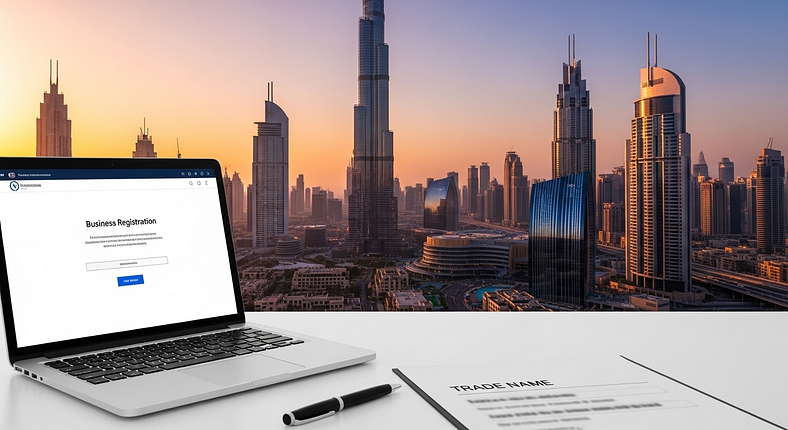
Your company name must comply with UAE naming conventions. The rules are straightforward but important:
- It must not contain offensive or religiously sensitive language.
- It must not replicate an existing registered name.
- It must reflect the nature of your business activity (for some license types).
- Abbreviations of personal names are allowed for professional licenses.
You can check name availability and reserve your trade name through the DET portal or your chosen free zone authority. Name reservation typically costs between AED 600--1,000 and is valid for a limited period.
Step 5: Apply for Your Business License

With your trade name approved and legal structure confirmed, you can proceed to the next phase of your business setup in Dubai --- license registration. The documents typically required include:
- Passport copies of all shareholders and directors
- Completed application forms (jurisdiction-specific)
- Memorandum of Association (MOA) or Articles of Association
- NOC (No Objection Certificate) from current UAE employer, if applicable
- Business plan (required for some regulated activities)
- Proof of address or tenancy agreement (Ejari for mainland companies)
License fees vary significantly based on activity type and jurisdiction, ranging from AED 5,000 for basic free zone packages to AED 15,000+ for mainland commercial licenses. Many free zones now offer flexi-desk or virtual office packages that reduce the overhead of physical office space requirements.
Step 6: Open a Corporate Bank Account

Dubai's banking sector is robust and globally connected. Major banks serving foreign business owners include Emirates NBD, Mashreq, RAKBANK, ENBD, and international institutions like HSBC and Citi.
Opening a corporate bank account requires your trade license, MOA, shareholder passports, proof of business activity, and in some cases a business plan. The process typically takes 2--4 weeks and may involve an interview with a bank relationship manager.
Important: Due to enhanced KYC (Know Your Customer) and AML (Anti-Money Laundering) compliance requirements, banks conduct thorough due diligence. Having a clear, well-documented business model will significantly speed up the process.
Step 7: Apply for Visas and Emirates ID

Once your license is issued, you can begin sponsoring visas. As the business owner, you are entitled to a residency visa, typically valid for 2--3 years and renewable. You can also sponsor visas for employees and dependents based on your company's visa quota.
The residency visa process involves:
- Entry permit issuance
- Medical fitness test
- Emirates ID registration (biometrics)
- Visa stamping on passport
Processing time is generally 5--10 business days. Costs range from AED 3,000--5,000 per visa, including medical and typing fees.
Golden Visa: Foreign investors who invest AED 2 million or more in a UAE business, property, or public investment fund may qualify for a 10-year Golden Visa --- offering long-term stability and a pathway to deeper UAE integration.
Common Mistakes Foreign Investors Make (And How to Avoid Them)
Even the most prepared entrepreneurs make avoidable errors during the setup process. Watch out for these:
- Choosing the wrong jurisdiction --- Operating from a free zone but targeting UAE retail customers without the right permissions will lead to compliance issues.
- Underestimating renewal costs --- Licenses, visas, and office leases must all be renewed annually or biannually.
- Skipping legal advice --- MOA drafting and shareholder agreements require professional input, especially for multi-partner ventures.
- Poor banking preparation --- Walking into a bank without a complete document set causes unnecessary delays.
- Ignoring VAT registration --- Businesses with taxable supplies exceeding AED 375,000 annually must register for 5% VAT with the Federal Tax Authority.
Ready to Make Your Move? Partner With Takween Advisory Today
Starting a business in Dubai is one of the most rewarding decisions a foreign investor can make --- but navigating the paperwork, choosing the right jurisdiction, and staying compliant with UAE regulatory requirements requires local expertise. That is where a professional business setup consultant like Takween Advisory makes all the difference.
Don't leave your Dubai dream to chance. Book a free consultation with a certified UAE business setup specialist today and get a tailored proposal for your exact business activity, budget, and goals. Whether you are launching a startup, expanding an existing brand, or setting up an investment vehicle, the right guidance can save you thousands of dirhams and months of frustration.
In case you are looking for a reliable business setup company in Dubai, having the right guidance can make your entire process smooth and hassle free. From selecting the right business activity to preparing documentation and obtaining approvals from relevant authorities, every step is important to ensure compliance and long term success. A professional setup partner helps you avoid delays and legal issues while streamlining the entire process. At Takween Advisory, we act as your trusted partner, handling everything from documentation to approvals so your business setup is completed efficiently while you focus on growing your venture.
Frequently Asked Questions (FAQs)
Q1: Can a foreigner own 100% of a business in Dubai?
Yes. As of the 2021 Commercial Companies Law amendments, foreign nationals can own 100% of their mainland company across most business activities. Free zones have always permitted full foreign ownership.
Q2: How much does it cost to start a business in Dubai in 2026?
Costs vary by jurisdiction and activity. Free zone packages start from as low as AED 5,750 for basic setups, while mainland commercial licenses typically range from AED 12,000--25,000+ inclusive of government fees.
Q3: How long does it take to set up a company in Dubai?
Most free zone companies can be registered within 3--7 business days. Mainland setups generally take 1--3 weeks, depending on the activity type and documentation completeness.
Q4: Do I need to be physically present in Dubai to register a company?
Not necessarily. Many free zones allow remote company formation with document attestation. However, bank account opening and visa processing typically require physical presence at some stage.
Q5: What is the difference between a Dubai free zone and mainland company?
A free zone company can only operate within its free zone or internationally and cannot trade directly with the UAE mainland market without a local distributor. A mainland company can conduct business anywhere in the UAE and internationally without such restrictions.
Q6: Is there corporate tax in Dubai?
The UAE introduced a 9% corporate tax in June 2023 for businesses earning above AED 375,000 annually. Businesses below this threshold are exempt. Free zone companies meeting certain conditions may still qualify for 0% tax on qualifying income.
Q7: Can I get a UAE residency visa through my Dubai company?
Yes. As a business owner, you can obtain a residency visa through your company. Investors who meet the AED 2 million investment threshold may qualify for the prestigious 10-year Golden Visa.
Q8: What is the best free zone in Dubai for a tech startup?
Dubai Internet City (DIC), Dubai Silicon Oasis (DSO), and Dubai Future District (in DIFC) are among the top choices for tech startups, offering tailored infrastructure, networking opportunities, and access to a thriving innovation ecosystem.
Conclusion
Dubai in 2026 is not just open for business --- it is actively engineering the conditions for foreign investors to thrive. With 100% foreign ownership on the mainland, a competitive corporate tax regime, a dynamic free zone ecosystem, streamlined trade license procedures, and long-term residency visa options, the emirate offers one of the most investor-friendly business environments on the planet. From DET approvals to MOA drafting, from Emirates ID registration to VAT compliance --- every element of the UAE's commercial infrastructure is built to support entrepreneurial ambition.
The path to launching your Dubai company is structured and achievable. Define your licensed activity, choose your jurisdiction, register your trade name, apply for your business license, open your corporate bank account, and secure your residency visa. Each step builds on the last, and with the right preparation, you can go from proposal to fully operational business in as little as 4--6 weeks.
You do not have to navigate this journey alone. Takween Advisory brings deep local expertise in UAE company formation, PRO services, government liaison, and investor visa processing --- making your transition into the Dubai market smooth, compliant, and cost-effective. The opportunity is real. The infrastructure is ready. The experts are standing by. Now the only question is --- are you?

You’re offline. This is a read only version of the page.
